
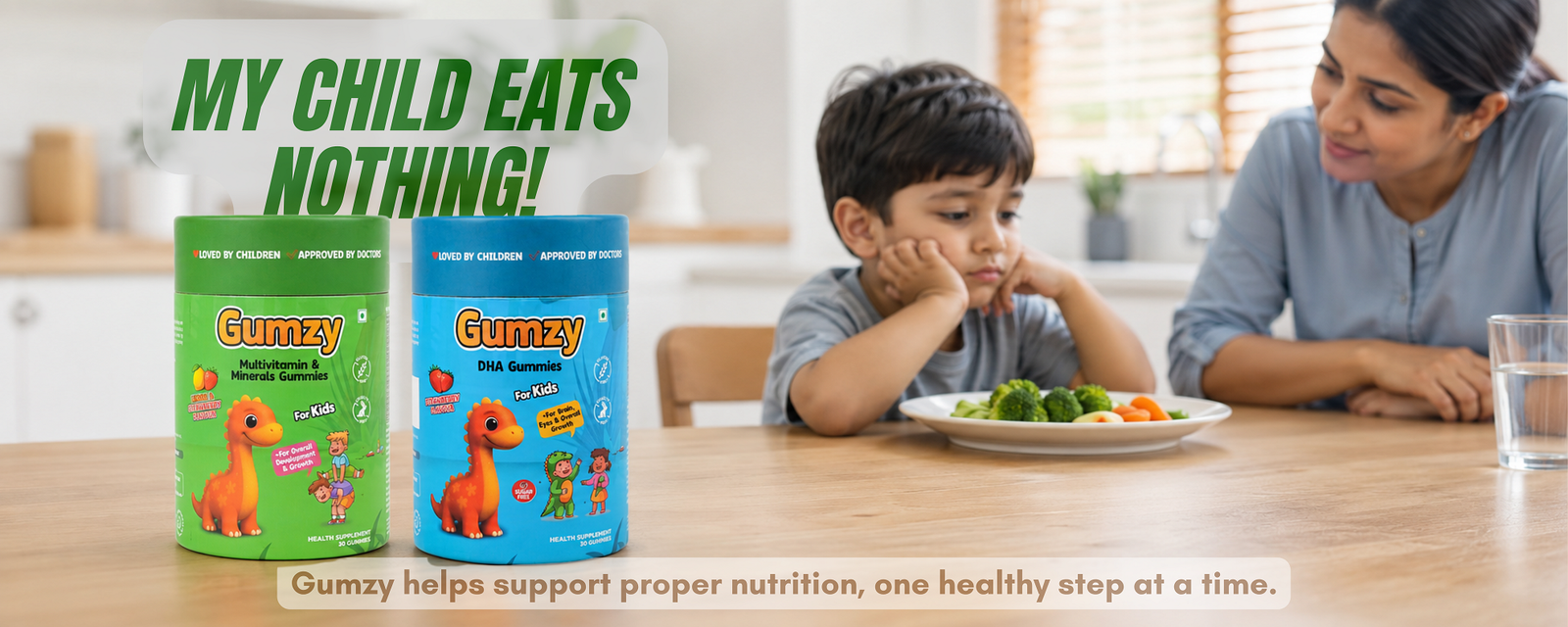
“My Child Eats Nothing!” A Realistic Nutrition Guide for Parents of Picky Eaters
If dinner at your house has become a negotiation, a bribery scheme, and occasionally a hostage situation — welcome. You’re in the largest, most exhausted club of parents on earth. The child who once ate everything now survives on plain rice, one specific biscuit brand, and air. The dal is “yucky.” The sabzi is “touching the roti.” And every relative has an opinion about it.
Here’s what this guide won’t do: shame you, promise a magic trick, or pretend a kale smoothie will fix everything. Here’s what it will do: explain why picky eating happens, which nutrients actually slip through the cracks, and the practical, kitchen-tested ways Indian parents are closing those gaps — without turning every meal into a war.
Why Picky Eating Is Normal (and When It Isn’t)
First, breathe. Food neophobia — suspicion of new foods — is a built-in developmental phase that typically peaks between ages two and six. Evolutionarily, a toddler who refused unfamiliar plants was a toddler who didn’t get poisoned. Your child isn’t broken; their ancient wiring is just doing its job at the worst possible time.
Most picky eating is selective but adequate: the menu is narrow, but weight and energy stay normal. That version is frustrating, not dangerous. The version that needs professional help looks different: a shrinking list of accepted foods (under 15–20 items), distress or gagging around new textures, weight falling across percentiles, or mealtime anxiety that dominates family life. That pattern deserves a paediatrician and possibly a feeding therapist — covered in the red flags section below.
The 5 Nutrients Picky Eaters Miss Most
Selective eaters don’t miss nutrients randomly. The same five gaps show up again and again, because the foods kids refuse (vegetables, dals, fish, variety in general) cluster around them:
- Iron — the big one. Refusing dals, greens and meat while drinking lots of milk is the classic recipe for low iron. Watch for fatigue, paleness and poor focus.
- Zinc — and here’s the cruel twist: zinc deficiency itself blunts appetite and dulls taste, making picky eating worse. A genuine vicious cycle.
- Vitamin D — indoor screen-time childhoods plus a vegetarian plate leave little room for it.
- B12 — near-absent in plant foods; a quiet gap in vegetarian families that affects energy and brain development.
- Omega-3 DHA — the brain-building fat that simply doesn’t exist in a rice-roti-paneer rotation.
If several of these worry you, our checklist of the signs of vitamin deficiency in children [LINK TO POST #2] helps you read the early signals.
Indian Kitchen Hacks That Actually Work
Forget Pinterest-perfect bento boxes. These are the tricks that survive contact with a real Indian kitchen and a real five-year-old:
- Shape changes everything. The same paratha, cut into triangles with a steel glass, becomes “pizza slices.” Idli batter in a mini-mould becomes “button idlis.” Novelty of form lowers suspicion of content.
- One safe food on every plate. Always include something they reliably eat next to the new item. A plate that’s 100% unfamiliar triggers full rejection; a plate that’s 70% safe invites exploration.
- The 15-exposure rule. Research suggests kids may need 10–15 relaxed exposures to a food before accepting it. Most parents give up by attempt three. Keep serving tiny, no-pressure portions — a single piece of carrot counts.
- Cook together, even badly. A child who tore the coriander or pressed the idli button has ownership. Ownership eats.
- Dips fix textures. Curd raita, homemade hummus, even mild chutney — kids who refuse a vegetable plain will often eat it as a delivery vehicle for a dip.
The “Division of Responsibility” Feeding Method
If you adopt only one idea from this article, take this one. The Division of Responsibility, developed by feeding specialist Ellyn Satter, splits mealtime jobs cleanly: you decide what food is served, when, and where; your child decides whether to eat it and how much.
That’s it. No force-feeding, no “two more bites,” no aeroplane spoons, no dessert-as-ransom. It feels terrifying for the first two weeks — children test the new system by eating almost nothing — and then something remarkable happens: with the power struggle gone, food becomes just food again. Appetite self-regulates. Decades of clinical use back this up, and it works just as well with rajma-chawal as with anything else.
Hidden-Veggie Recipes That Don’t Insult Your Child’s Intelligence
A word of honesty: sneaking vegetables is a bridge strategy, not a cure — kids eventually need to knowingly eat plants. But while you’re building that bridge, nutrition still has to arrive daily. Fair-play options:
- Grated into the familiar: lauki or carrot disappears into theplas, cheelas and dosa batter without changing the experience.
- Blended into bases: spinach or beetroot pureed into dal, pasta sauce or pav bhaji (which is basically hidden vegetables with a fan following).
- Upgraded staples: ragi flour mixed into dosa or roti atta quietly adds iron and calcium; oats powdered into kheer adds fibre.
The “don’t insult them” rule: never lie when asked. “Yes, there’s palak in it — can you even taste it?” builds trust. Getting caught in a vegetable cover-up sets you back months.
When a Multivitamin Bridge Makes Sense
Now the question every picky-eater parent eventually Googles at midnight: should I just give a supplement?
The honest answer: a daily multivitamin is a sensible bridge for a selectively-eating child — a safety net that covers the gap years while food acceptance slowly widens. It is not permission to stop trying with food, and it can’t replicate the fibre, protein and thousands of plant compounds real meals provide.
If you go this route, format matters enormously for this exact audience: a child who refuses food will absolutely refuse a bitter syrup or a tablet. A tasty pectin-based gummy flips the dynamic — it’s the one “health thing” kids ask for. Gumzy’s Kids Complete Multivitamin Gummies were built for precisely this child: 10+ vitamins and minerals including zinc (remember the appetite cycle), iron-supportive B-vitamins, and vitamin D, in a lemon-strawberry gummy with no gelatin and no added-sugar tricks. Our full guide to multivitamin gummies for picky eaters [LINK TO PILLAR #1] explains how to judge any brand’s label, including ours.
Red Flags That Need a Pediatrician
Self-help has limits. Book a proper consultation if you see: weight loss or flat growth over 6+ months; fewer than ~15 accepted foods or whole food groups eliminated; gagging, vomiting or fear around textures; signs of anaemia (paleness, exhaustion); or mealtimes causing genuine distress to the child, not just the parents. Paediatric feeding therapy exists, it works, and using it is good parenting — not failure.
Frequently Asked Questions
Is picky eating a phase?
For most children, yes — selective eating peaks between ages 2 and 6 and gradually widens through the school years, especially when mealtimes stay low-pressure. A minority develop persistent feeding difficulties that benefit from professional support; the red flags above tell you which situation you’re in.
Should I force my child to finish their plate?
No. Decades of feeding research consistently show pressure backfires — it increases food aversion and teaches children to ignore their own fullness signals. Serve small portions, allow seconds, and let appetite do its job.
Do picky eaters need supplements?
Not automatically — a mildly selective eater with decent variety usually doesn’t. But a child with a very narrow menu, especially a vegetarian one, commonly runs short on iron, zinc, B12, vitamin D and DHA, and a daily multivitamin is a reasonable bridge while you expand the diet. Test first if symptoms are present.
The Bottom Line
Picky eating is a marathon nobody signed up for, but the finish line is real: keep exposures relaxed, hand the eat/don’t-eat decision back to your child, smuggle nutrition fairly while trust builds, and use a daily gummy as the safety net underneath it all. Five years from now, the child who only ate plain rice will be stealing food off your plate. Until then, you’ve got this.
Make the safety net the easiest part of your day. Try Gumzy’s Kids Complete Multivitamin Gummies — the one nutrition battle you’ll never have to fight.







Add comment