

The Sunshine Paradox: Why Children in Sunny India Lack Vitamin D
Here’s a riddle: India gets sunshine roughly 300 days a year. Vitamin D is made in the skin from sunlight, free of cost. And yet study after study finds that a majority of Indian children by many estimates well over half are vitamin D deficient [cite Indian paediatric studies].
A tropical country, deficient in the sunshine vitamin. It sounds impossible. It’s actually very logical once you look at how modern Indian childhood works and once you see the mechanics, the fix becomes obvious too.
The Surprising Numbers
Indian research over the past two decades has repeatedly found vitamin D deficiency or insufficiency in 50–90% of children sampled, across cities, income levels and diets [cite]. This isn’t a poverty problem affluent urban kids often test worse than rural ones. It isn’t a diet problem alone either, since almost no common Indian food contains meaningful vitamin D. It’s a lifestyle-and-biology problem, which is why it hides so well.
Why Sun Exposure Isn’t Working
Four quiet forces team up against your child’s vitamin D production:
- Melanin, the natural sunscreen. The same melanin that protects Indian skin from sun damage also slows vitamin D synthesis — darker skin can need 3 to 6 times longer in the sun to make the same amount a fair-skinned person makes in minutes.
- The indoor childhood. Tally your child’s actual direct-sun minutes on a school day: a covered school van, classrooms, tuition, then screens. For many urban kids the honest answer is close to zero. Glass doesn’t help UVB rays, the ones that make vitamin D, don’t pass through windows.
- Air pollution. In many Indian cities, haze and particulate matter filter out a meaningful share of UVB before it ever reaches the playground.
- Timing and clothing. UVB is strongest between roughly 10 AM and 2 PM exactly when kids are in school. Early-morning or evening play, plus full-sleeve uniforms, produces very little vitamin D no matter how long it lasts.
Add these up and the paradox dissolves: plenty of sunshine in the country, almost none on the child.
Symptoms in Children by Age
Vitamin D deficiency is famously quiet, which is why doctors call it the silent epidemic. The clues differ by age:
- Toddlers (1–3): delayed walking, bowing of the legs, delayed teething or fontanelle closure, irritability. Severe deficiency at this age can become rickets still seen in Indian clinics today.
- School-age kids (4–12): vague leg and bone pain (often labelled “growing pains”), frequent infections, fatigue, muscle weakness — the child who tires before friends do.
- Teens: aches, low mood and low energy that get blamed on screens, hormones or exam stress sometimes correctly, sometimes not.
Many of these overlap with other nutrient gaps, so read them alongside our full checklist of deficiency signs in children.
Vitamin D’s Role in Bones, Immunity & Mood
Vitamin D’s headline job is calcium absorption without it, the calcium in milk and ragi largely passes through unused, which is why a milk-drinking child can still have soft bones. But the modern research story is wider: vitamin D receptors sit on immune cells (linking deficiency to frequent infections), on muscle tissue (strength and coordination), and in the brain (mood regulation). It behaves less like a vitamin and more like a hormone with a company-wide role.
Food Sources (and Why Indian Diets Fall Short)
Here’s the uncomfortable list of natural vitamin D foods: oily fish, egg yolks, liver, and… that’s roughly it. For a vegetarian Indian child the natural-food route is essentially closed. Fortified foods help a little some milk brands and packaged atta add vitamin D but typical servings cover only a fraction of a child’s daily need. This is the rare nutrient where “just fix the diet” genuinely isn’t a complete answer, and supplementation enters the conversation on merit.
Safe Supplementation Levels by Age
General reference ranges used in paediatric practice (always confirm with your own doctor, especially if treating a diagnosed deficiency):
- Infants under 1: 400 IU/day — commonly prescribed as drops from birth.
- Children 1–18: 600 IU/day for routine maintenance; doctors often prescribe higher therapeutic doses for a limited period when correcting a tested deficiency.
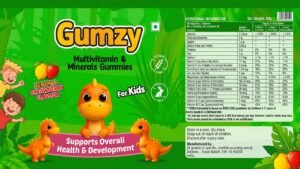
Two safety notes. First, vitamin D is fat-soluble and accumulates, so more is not better stick to label or prescription doses. Second, D3 (cholecalciferol) is generally preferred over D2 for raising blood levels. A daily multivitamin that includes child-appropriate D3 like Gumzy’s Kids Multivitamin Gummies is a practical maintenance layer for the indoor-childhood years; our guide to choosing a kids multivitamin shows what else to check on a label.
Testing: When and How
The test is simple: serum 25-hydroxyvitamin D, a standard blood draw available at virtually every Indian lab. Broadly, values below 12 ng/mL indicate deficiency, 12–20 ng/mL insufficiency, and above 20 ng/mL sufficiency for most children [cite IAP guidance]. Test if your child has symptoms from the list above, follows a fully indoor routine, or before starting anything beyond a routine maintenance dose. Re-test after about three months of correction numbers, not vibes, should drive the dose.
Frequently Asked Questions
How much sun does a child need daily?
As a rule of thumb for Indian skin tones: roughly 20–30 minutes of midday sun (between about 10 AM and 2 PM) with face and arms exposed, several times a week. Early morning “soft sun” feels pleasant but contains too little UVB to make meaningful vitamin D.
Can too much vitamin D be harmful?
Yes. Because it’s fat-soluble, chronic over-supplementation can raise calcium to harmful levels, affecting kidneys and more. Toxicity essentially never comes from sunlight or food only from excessive supplements which is why doses beyond routine maintenance should be doctor-guided and time-limited.
D2 vs D3 — which is better for kids?
D3 (cholecalciferol) is generally preferred: it raises and sustains blood vitamin D levels more effectively than D2 (ergocalciferol). Most quality children’s supplements, including gummies, use D3 check the label.
The Bottom Line
The sunshine paradox isn’t really a paradox it’s arithmetic. Melanin plus indoor schedules plus pollution plus full-sleeve uniforms equals very little vitamin D, no matter what the weather app says. The response is equally arithmetic: deliberate midday sun when possible, fortified foods where available, a tested baseline when in doubt, and a sensible daily maintenance dose for the months when modern childhood wins.
Cover the indoor days without a daily argument. Gumzy’s Kids Complete Multivitamin Gummies include child-appropriate vitamin D3 alongside 10+ other essentials one tasty gummy, every day, done.






Add comment