
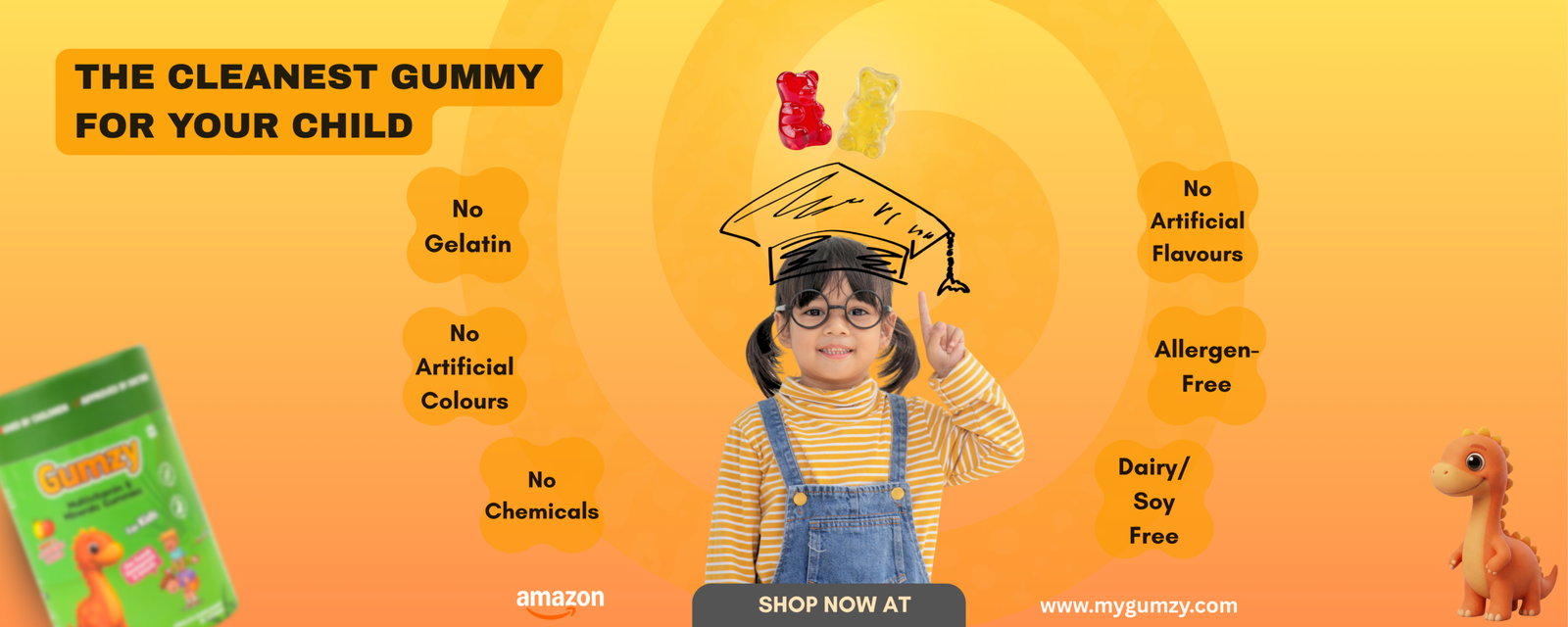
10 Silent Signs of Vitamin Deficiency in Children
Here’s something most parents discover too late: vitamin deficiency in children rarely announces itself. There’s no fever, no rash, no dramatic moment that sends you rushing to the doctor. Instead, it whispers — a child who’s a little more tired than usual, catches one cold too many, or whose nails develop tiny white flecks you barely notice while clipping them.
India’s national health data shows micronutrient gaps are remarkably common in children, even in households where nobody skips a meal [cite NFHS-5]. The good news? Once you know what to look for, the early signs are surprisingly readable. Here are ten of them, each paired with the nutrient it most often points to — plus what to actually do if you tick more than a couple of boxes.
1. Constant Fatigue (Iron / B12)
Every child has lazy days. But if your once-bouncy kid now flops on the sofa after school, dodges the park, and seems to run out of battery by evening, low iron or vitamin B12 is the first suspect. Both nutrients are central to making red blood cells — the delivery trucks that carry oxygen to muscles and the brain. Fewer trucks, less energy. It’s that direct.
Vegetarian households should pay special attention here: B12 comes almost entirely from animal foods, and plant iron absorbs poorly, so both gaps often travel together.
2. Frequent Colds and Infections (Vitamin C / D / Zinc)
One or two seasonal sniffles are normal childhood. A child who catches everything going around the classroom — and takes ages to recover each time — may have an immune system running on low fuel. Vitamin C, vitamin D, and zinc are the trio that keeps immune defences sharp; a shortfall in any of them shows up as infections that arrive often and overstay their welcome.
3. Pale Skin and Inner Eyelids (Iron)
This is the classic check Indian grandmothers have done for generations, and modern medicine agrees with them. Gently pull down your child’s lower eyelid: the inside should be a healthy pinkish-red. If it looks pale or whitish, low haemoglobin — usually from iron deficiency — is a real possibility. Pale palms and an overall washed-out complexion tell the same story.
4. White Spots on Nails (Zinc)
Those small white flecks on fingernails are often dismissed as “calcium spots,” but they’re more commonly linked to zinc status. Zinc drives cell growth, and nails — which grow constantly — are among the first tissues to show when it runs short. One spot after a stubbed finger means nothing; flecks across several nails are worth noting.
5. Slow Wound Healing
Kids collect scrapes the way they collect stickers. Watch how those scrapes behave. A graze that takes weeks to close, or bruises that linger far longer than they should, can signal shortfalls in vitamin C (which builds collagen), zinc (which drives tissue repair), or protein generally. Healing speed is one of the body’s most honest progress reports.
6. Bone or Leg Pain (Vitamin D)
“Growing pains” are real — but persistent aching in the legs, especially at night, can also be an early sign of vitamin D deficiency, which in its severe form leads to rickets. If your child complains of leg pain regularly, walks reluctantly, or you notice any bowing of the legs in a toddler, get vitamin D levels checked rather than waiting it out. (We’ve written a full piece on why even kids in sunny India end up vitamin D deficient [LINK TO POST #4].)
7. Mouth Ulcers and Cracked Lip Corners (B-Complex)
Recurring mouth ulcers, a sore or unusually smooth tongue, and painful cracks at the corners of the lips (angular cheilitis) form a cluster that points to B-vitamin gaps — riboflavin (B2), folate (B9), or B12. One ulcer after a cheek bite is nothing. The same problems returning month after month is a pattern, and patterns are information.
8. Poor Concentration (Iron / Omega-3)
A child who can’t sit through homework, drifts off mid-task, or whose teacher mentions “attention issues” may not have a discipline problem at all. Iron deficiency measurably affects attention and learning in children, and omega-3 DHA is structural material for the brain itself. Before assuming behavioural causes, it’s reasonable to rule out the nutritional ones — they’re far easier to fix.
9. Hair Thinning or Dull, Brittle Hair (Biotin / Iron)
Children’s hair should look almost unfairly glossy. Hair that’s turned dull, breaks easily, or is visibly thinning — more strands on the pillow, a widening parting — often traces back to iron stores (ferritin), biotin, or protein intake. Hair is a low-priority tissue for the body; when nutrients run short, hair is among the first places savings are made.
10. Delayed Growth
The most important sign is also the slowest to notice: a child drifting downward across percentile lines on the growth chart, or visibly lagging behind classmates in height and weight over a year or more. Growth is the sum of all nutrition. Persistent faltering deserves a proper paediatric workup, not just a supplement — but chronic micronutrient gaps (zinc, vitamin D, iron) are frequent contributors.

What To Do: Testing First, Then Diet, Then Supplements
If two or more of these signs feel familiar, resist the urge to panic-buy supplements. Follow the sequence that actually works:
- A basic panel — haemoglobin, ferritin, vitamin D, B12 — costs a few hundred rupees at any lab and turns guesswork into a plan. You can’t fix what you haven’t measured.
- Fix the plate. Whatever the result, food comes first: iron-rich dals and ragi, vitamin C fruit alongside meals, eggs or fortified foods for B12, sensible sun time for vitamin D.
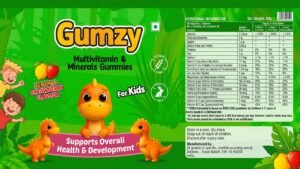
- Bridge the gap. For everyday shortfalls — especially in picky eaters — a well-formulated daily multivitamin acts as a safety net. A pectin-based, no-nonsense option like Gumzy’s Kids Multivitamin Gummies covers vitamins A, C, D, E, B-complex, zinc and magnesium in a format kids take without a fight. If you’re comparing options, our guide to choosing a kids multivitamin [LINK TO PILLAR #1] walks through exactly what to check on the label.
One sequencing note: diagnosed iron deficiency usually needs dedicated iron under medical guidance — a general multivitamin alone won’t correct it. Our complete guide to iron deficiency in children [LINK TO POST #7] covers that path in detail.
When It’s an Emergency
Most deficiency signs build slowly and allow a measured response. A few don’t. See a doctor promptly — not next month — if your child shows extreme lethargy or breathlessness on mild activity, fainting, rapid unexplained weight loss, visible bone deformity, or developmental regression (losing skills they previously had). These can indicate severe deficiency or something else entirely, and both possibilities need a professional, not a blog post.
Frequently Asked Questions
Which vitamin deficiency is most common in Indian children?
Iron deficiency tops the list — national surveys consistently find a large share of Indian children anaemic — followed closely by vitamin D and B12 deficiency, the latter especially in vegetarian families. Zinc deficiency is also widespread but less frequently tested.
Can blood tests detect all deficiencies?
Most clinically important ones, yes: haemoglobin and ferritin for iron, serum 25(OH)D for vitamin D, and serum B12 are all standard, affordable tests. Some micronutrients (like zinc) are harder to measure precisely, so doctors often combine test results with symptoms and dietary history.
How long does it take to correct a deficiency?
With consistent treatment, energy levels often improve within 2–4 weeks, but replenishing the body’s stores takes longer — typically about 3 months for iron, and 6–8 weeks of supplementation for vitamin D, followed by maintenance. Always complete the full course your doctor recommends, even when symptoms disappear early.
The Bottom Line
None of these ten signs, alone, proves a deficiency — kids are wonderfully weird, and a single symptom can have a dozen innocent causes. The skill is pattern-spotting: fatigue plus pallor plus poor focus is a different story from one tired Tuesday. Trust the pattern, test cheaply, fix the plate, and bridge the everyday gaps.
Want a daily safety net while you work on the diet? Explore Gumzy’s Kids Complete Multivitamin Gummies [LINK TO PDP] — 10+ essential vitamins and minerals, 100% vegan, in a lemon-strawberry flavour kids actually ask for.





Add comment