
DHA for Brain Health in Kids
DHA for Brain Health in Kids: What Parents Should Know
As children grow, parents naturally pay attention to nutrition that supports healthy development. Protein, iron, calcium, vitamin D and other essential kids multivitamin have important roles. One nutrient that often comes up in conversations about children’s brain health is DHA. In this article you will discover how DHA supports brain health and development in kids. As first time parents, you will also know about DHA benefits, food sources, supplements, and what every caregiver should know.
DHA, or docosahexaenoic acid, is a long-chain omega-3 fatty acid. It is an important structural component of cell membranes and is particularly abundant in the brain and retina. Research has established an important nutritional role for omega-3 fatty acids during development, although the evidence that taking DHA supplements directly improves cognition in otherwise healthy children is not as straightforward.
So, what should parents actually know about DHA?
What is DHA?
DHA stands for docosahexaenoic acid. It belongs to the omega-3 family of fatty acids, alongside EPA (eicosapentaenoic acid) and ALA (alpha-linolenic acid).
DHA is naturally present in foods such as fatty fish and seafood. Smaller amounts can also be obtained from certain fortified foods and supplements.
The body can make DHA from ALA, an omega-3 fatty acid found in foods such as flaxseeds, chia seeds and walnuts. However, conversion of ALA to DHA is limited, which is one reason dietary sources of DHA can be important.
For children, DHA is particularly relevant because the brain and nervous system undergo substantial development throughout childhood.
Why is DHA important for children’s brain health?
DHA is a major omega-3 fatty acid found in the brain. It contributes to the structure and function of cell membranes, including those of nerve cells.
This does not mean that taking more DHA automatically makes a child smarter or improves school performance.
Rather, DHA is one component of a child’s overall nutritional environment. Adequate nutrition supports normal growth and development, while the brain also depends on sleep, physical activity, learning opportunities, emotional wellbeing and a balanced diet.
This distinction is important when parents see products marketed as “brain boosters.”

DHA for brain health in kids
Brain development begins before birth and continues throughout childhood and adolescence. Long-chain omega-3 fatty acids are involved in neurological and visual development, particularly during periods of rapid development.
DHA is therefore an important nutrient to consider as part of an overall balanced diet.
However, research on whether omega-3 supplementation improves cognitive performance in healthy children has produced mixed results.
A systematic review of randomized controlled trials in children and adolescents found that cognitive benefits were not consistently demonstrated across studies.
What does this mean for parents?
It means DHA should be viewed as an important nutrient, rather than a guaranteed way to improve intelligence, concentration or academic performance.
Good nutrition provides the foundation. Supplements may have a role in situations where dietary intake is inadequate, but they should not replace a varied diet or healthy lifestyle.
Does DHA improve focus and memory in kids?
This is one of the most common questions parents have.
The answer is: the evidence is not strong enough to say that DHA supplements reliably improve focus or memory in all children.
Some research has reported positive findings in particular groups or under particular conditions, but results across clinical trials have been inconsistent.
For example, research has explored omega-3 supplementation in children with different nutritional profiles and health conditions. Outcomes can vary according to baseline omega-3 status, the amount and type of fatty acid provided, duration of supplementation and characteristics of the children studied.
Therefore, parents should be cautious about products promising instant improvements in:
- concentration
- memory
- intelligence
- exam performance
- attention
- academic results
Diet rich in DHA improves brain health in kids and contributes to normal neurodevelopment. However, no single nutrient can substitute for adequate sleep, nutritious food, physical activity, supportive relationships and appropriate learning environments.
How can children get DHA naturally?
Food should generally be the starting point for children’s nutrition and there are certain foods that are rich in DHA.
DHA can be obtained from fatty fish and seafood, depending on the family’s dietary preferences and the child’s age.
For families who eat fish, options can include appropriately prepared fish that are suitable for children. Parents should also consider local dietary guidance regarding fish choices and potential exposure to contaminants such as mercury.
For vegetarian or vegan families, dietary sources of preformed DHA can be more limited. Algal DHA is one option found in some fortified foods and supplements.
A child’s overall diet matters more than focusing on a single nutrient.
A balanced diet can include:
- vegetables and fruits
- whole grains
- pulses and legumes
- dairy or appropriate alternatives
- nuts and seeds where age-appropriate and safe
- adequate protein
- healthy fats
- suitable sources of omega-3 fatty acids
Should parents consider DHA supplements for kids?
A DHA supplement may be worth discussing when a child’s diet provides little or no dietary DHA, or when there are specific nutritional considerations.
However, the decision should be based on the individual child’s diet, age, nutritional needs and the formulation of the product.
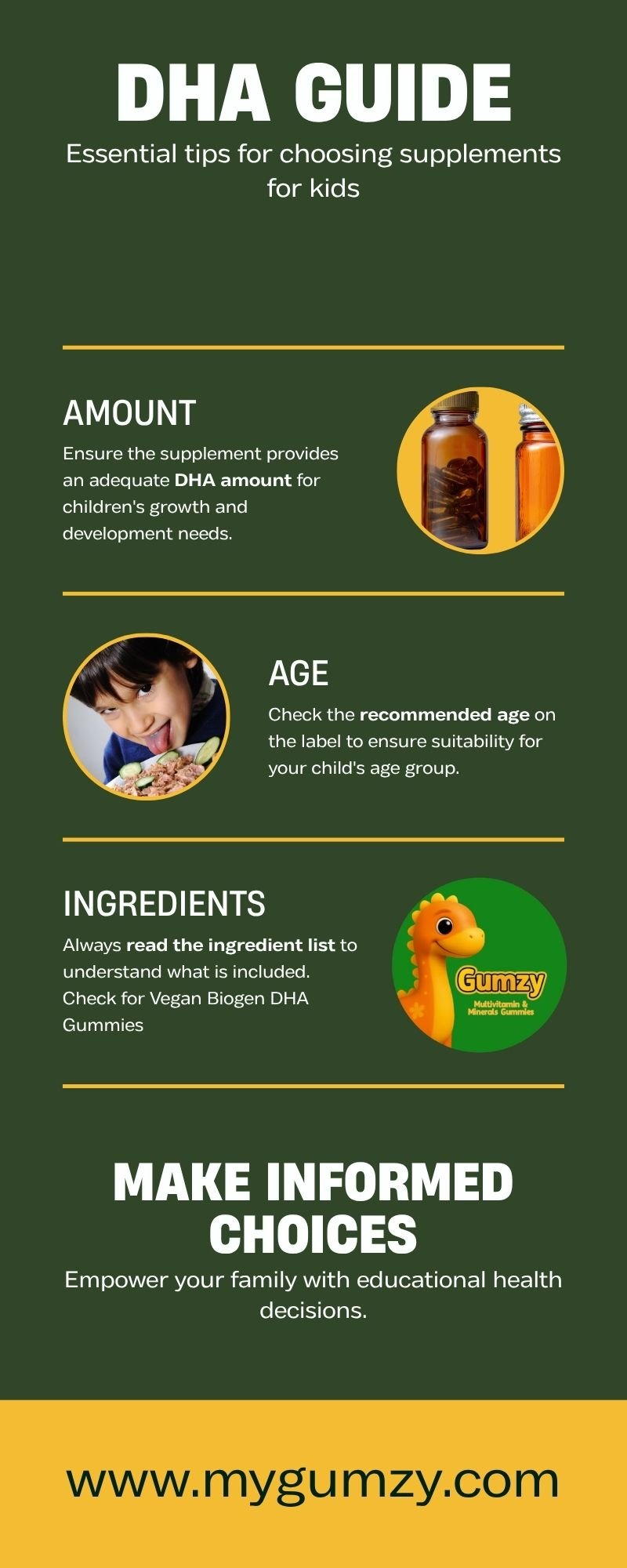
Parents should pay attention to:
1. The actual DHA amount
Look at the nutrition or supplement facts panel rather than relying only on phrases such as “brain health” or “omega-3.”
2. The child’s age
Products are often formulated for specific age groups. Parents should follow the product’s age guidance.
3. Other ingredients
Check the complete ingredient list, especially if the child has known food allergies or dietary restrictions.
4. Quality and transparency
Choose products from manufacturers that clearly disclose their ingredients and nutritional information.
5. Professional advice when needed
If a child has a restricted diet, significant nutritional concerns or a medical condition, parents should discuss supplementation with a pediatrician or qualified healthcare professional.
Gummies can be convenient for families because some children find them easier to take than capsules or liquid supplements.
But the format should not be the main consideration.
When choosing DHA gummies for kids, parents should look at:
- DHA content per serving
- recommended age
- complete ingredient list
- serving size
- allergen information
- storage instructions
- manufacturer information
- appropriate quality standards
It is also important to follow the recommended serving rather than assuming that more is better.
A supplement should complement a child’s diet—not replace nutritious foods.
Can DHA replace a healthy diet?
No.
This is perhaps the most important point for parents.
A DHA supplement cannot provide all the nutrients a growing child needs. Children require a wide variety of nutrients from different foods.
For example:
Protein contributes to growth and tissue maintenance.
Iron is important for normal cognitive development and oxygen transport.
Calcium and vitamin D contribute to normal bone development.
Iodine contributes to normal cognitive development and thyroid function.
Zinc contributes to normal immune function and growth.
DHA is one piece of this much larger nutritional picture.
DHA and the bigger picture of children’s brain health
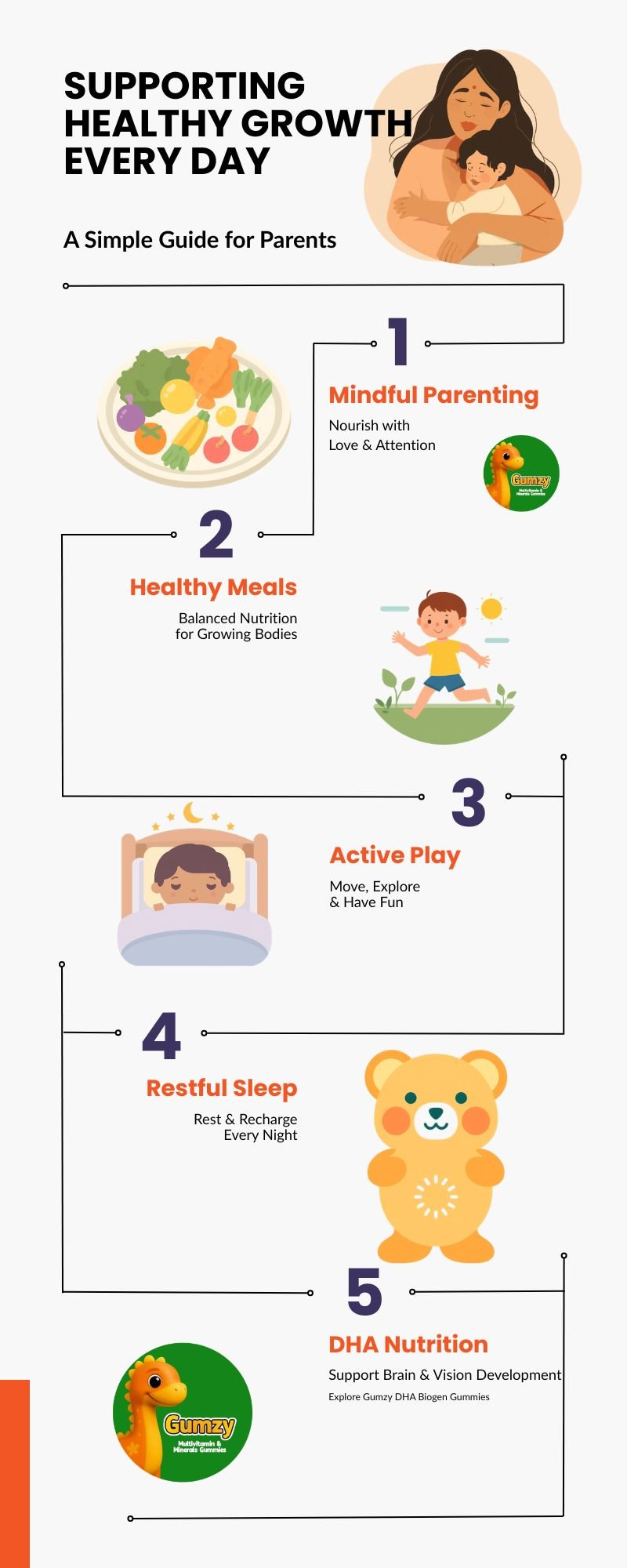
Parents sometimes focus heavily on supplements when thinking about brain health. But several everyday factors can be just as important.
Sleep
Children need sufficient, age-appropriate sleep for overall health and wellbeing.
Physical activity
Regular movement and age-appropriate physical activity support children’s physical and mental wellbeing.
Balanced nutrition
A varied diet provides the broad range of nutrients and DHA for brain health in kids.
Learning and stimulation
Reading, conversation, play and age-appropriate learning experiences provide important opportunities for children’s developing brains.
Emotional wellbeing
A supportive home environment and healthy relationships are also important parts of a child’s development.
DHA should therefore be considered within this broader framework rather than as a standalone “brain booster.”
What does the research actually say?
Scientific research on omega-3 fatty acids and children’s cognition is ongoing.
A 2020 systematic review examined 33 studies involving children and adolescents and found that results varied across studies. The authors noted that certain doses and increases in omega-3 status were associated with a greater likelihood of cognitive benefits, but the evidence did not establish a simple universal dose or guaranteed effect for every child.
A separate 2020 meta-analysis involving 29 studies and more than 4,000 participants found no overall main effect of omega-3 supplementation on domain-specific cognitive performance in youths. Some subgroup findings suggested potential benefits associated with EPA-rich formulations rather than DHA-rich formulations in particular cognitive domains.
More recent reviews continue to describe the evidence as an area of active research rather than something that supports sweeping claims about cognitive enhancement.
For parents, the practical takeaway is simple:
DHA is an important omega-3 fatty acid involved in brain and visual development, but a DHA supplement should not be presented as a guaranteed way to improve intelligence, memory or academic performance.
Frequently Asked Questions
What is DHA in children’s supplements?
DHA is a long-chain omega-3 fatty acid. It is naturally found in foods such as fatty fish and is also available in some children’s supplements.
Is DHA good for children’s brain health?
DHA is an important structural component of the brain and is involved in normal neurological development. However, evidence that DHA supplementation improves cognitive performance in healthy children is mixed.
Does DHA improve memory in kids?
Current evidence does not support a universal claim that DHA supplements improve memory in all children. Some studies have reported benefits in specific populations or circumstances, but results have been inconsistent.
Are DHA gummies suitable for children?
Some DHA gummies are specifically formulated for children. Parents should check the product’s recommended age, serving size, DHA content and complete ingredient list before use.
Can children get DHA from food?
Yes. Fatty fish and seafood are dietary sources of DHA. Some fortified foods and algal-based products can also provide DHA.
Should every child take a DHA supplement?
Not necessarily. Whether supplementation is appropriate depends on the child’s diet, age, nutritional needs and individual circumstances. Parents with concerns about a child’s nutrition should discuss them with a pediatrician or qualified healthcare professional.
The bottom line for parents
DHA deserves attention because it is an important omega-3 fatty acid found in the brain and involved in normal neurological and visual development.
But parents don’t need to look for a “magic brain supplement”, they just need DHA for brain health in kids.
The best approach is to build a strong nutritional foundation through a varied diet, healthy sleep, physical activity, learning, play and emotional support.
When dietary DHA is limited, a properly formulated children’s DHA supplement may be one option to discuss with a healthcare professional.
For parents considering a DHA supplement for kids, the goal should be to support nutritional adequacy—not to promise instant improvements in intelligence, memory or school performance.
Explore children’s DHA nutrition with Gumzy
Gumzy’s children’s nutrition range is designed to make selected nutrients easier to include in everyday routines. Parents can review the product’s DHA content, ingredients, age guidance and serving recommendations before deciding whether it fits their child’s nutritional needs.







Add comment