
DHA Gummies for Kids: Side Effects and Safety Guide
DHA Gummies for Kids: Side Effects and Safety Guide
Parents often search for DHA gummies side effects for kids before introducing an omega-3 supplement.
DHA is an important omega-3 fatty acid found naturally in foods and supplements. However, like any supplement, a DHA gummy should be used according to its instructions and considered within the child’s overall diet.
Are DHA Gummies Generally Safe?
Omega-3 supplements are generally well tolerated, but side effects can occur.
Reported side effects are usually mild and can include:
- Unpleasant taste
- Bad breath
- Heartburn
- Nausea
- Stomach discomfort
- Diarrhea
- Headache
Not every child will experience these effects.
Check the DHA Amount
One of the most important things parents can do is look beyond the words “omega-3” on the front of a package.
Different omega-3 supplements contain different amounts and combinations of ALA, EPA and DHA.
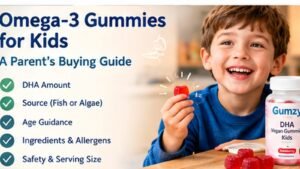
Gumzy DHA Vegan Gummies provide 200 mg of marine-algal DHA per gummy.
The product directions recommend one gummy daily or following healthcare-professional advice.
Parents should not increase the serving simply because they believe more DHA will produce greater benefits.
Choking Safety Matters
Gummies are chewable supplements, but they can still present a choking risk for young children.
Gumzy’s product guidance recommends supervision while children chew the gummies and states that the product is not recommended for children under 2 years.
Always follow the current packaging instructions.
What About Medication Interactions?
Omega-3 supplements can interact with some medicines.
If a child takes regular medication or has a medical condition, parents should discuss supplementation with the child’s healthcare professional.
Can Children Take DHA Every Day?
The answer depends on the individual child, diet and product directions.
For Gumzy DHA Gummies, the stated serving is one gummy daily, with healthcare-professional advice as an alternative.
Parents should not combine several omega-3 supplements without first checking the total intake and discussing the plan with a healthcare professional.
What Should Parents Check Before Buying?
Use this checklist:
Age: Is the product appropriate for your child’s age?
DHA amount: How much DHA does each serving actually provide?
Source: Is the DHA fish-derived or algae-derived?
Ingredients: Does the formula fit your child’s dietary requirements?
Directions: Is there a clearly stated daily serving?
Safety: Are appropriate choking warnings provided?
Medical considerations: Does your child take medication or have a medical condition?
When Should You Speak With a Healthcare Professional?
Talk to your child’s pediatrician or another qualified healthcare professional if:
- Your child has a chronic medical condition
- Your child takes regular medication
- You are unsure whether supplementation is necessary
- Your child has significant dietary restrictions
- You are considering combining multiple supplements
- Your child experiences persistent or concerning symptoms after taking a supplement
Final Takeaway
DHA supplements can be a convenient way to provide omega-3 nutrition, but parents should focus on appropriate serving size, product quality, age guidance and their child’s individual nutritional needs.
Gumzy DHA Vegan Gummies provide 200 mg marine-algal DHA per gummy, with a stated recommendation of one gummy daily for children aged 2 years and above.
Explore: Gumzy DHA Vegan Gummies
Medical & Nutrition Review
This article is intended for general educational purposes. Children’s nutritional needs vary by age, diet and individual circumstances. Parents should consult a pediatrician or qualified healthcare professional when considering supplementation for a child with a medical condition, restricted diet, medication use or suspected nutritional deficiency.
Written by : Dr Parag Sharma MD, Lifestyle Medicine Expert, India
Medically reviewed by : Dr Saniya Khan PhD, Certified Nutrionist and Researcher, Italy
Last reviewed: 1 October 2026
Next review: 1 April 2027
Our sources: WHO, ICMR-NIN, CDC, UNICEF, NHS, Mayo Clinic, NIH and peer-reviewed studies.
References
- National Institutes of Health, Office of Dietary Supplements. Omega-3 Fatty Acids — Fact Sheet for Consumers.
NIH Office of Dietary Supplements - National Institutes of Health, Office of Dietary Supplements. Omega-3 Fatty Acids — Health Professional Fact Sheet.
NIH Health Professional Fact Sheet - European Food Safety Authority. Health Claims — Article 14.
European Food Safety Authority

Vegan DHA gummies for kids — nourishment from plants, not fish.