
Exam Season Fuel: The Science of Feeding Your Child’s Brain for School
Every exam season, Indian households transform. Television goes silent, tuition hours double, and somewhere a parent is Googling “best food for child memory” at midnight. The instinct is right, even if the marketing aimed at it is mostly wrong: the brain is a hungry organ in children it burns up to half the body’s daily energy and what fuels it genuinely shapes attention, memory and stamina in a classroom.
So let’s skip the miracle “brain tonics” and look at what research actually supports: one meal that matters more than the rest, five nutrients with real evidence behind them, the tiffin-box mistake that sabotages afternoons, and an exam-week plan you can run from a normal Indian kitchen.
The Breakfast Effect: What Studies Show
If nutrition science offers one near-unanimous finding for school kids, it’s this: children who eat breakfast perform better on attention, memory and problem-solving tasks through the morning than children who skip it, and the effect is strongest by mid-morning right when the maths period lands [cite reviews].
The mechanism is simple supply-and-demand: after a night’s fast, the brain’s glucose reserves are low, and it has no fuel tank of its own. Quality matters too — a breakfast with slow carbs plus protein (vegetable poha with peanuts, besan cheela with curd, egg with roti, idli-sambar) releases glucose steadily for hours, while a sugary cereal spikes and crashes before the second period bell.
5 Focus Nutrients: Iron, B12, Omega-3, Zinc, Iodine
- Iron — the strongest evidence of the five. Iron carries oxygen to the brain and helps make dopamine; even mild deficiency in children is repeatedly linked to poorer attention and learning outcomes, and correcting it improves them [cite]. If your child is pale, tired and unfocused, start here our complete guide to iron deficiency in children covers testing and fixes.
- Vitamin B12 — essential for the insulation (myelin) around nerve fibres. Low B12, common in vegetarian families, shows up as brain fog, poor memory and fatigue.
- Omega-3 DHA — the structural fat the brain is partly built from. Evidence links adequate DHA with attention and reading measures in children; vegetarian diets contain almost none. The full research story is in our omega-3 and brain development deep-dive.
- Zinc — supports the enzymes behind neurotransmitter activity; deficiency degrades attention and, sneakily, appetite itself.
- Iodine — the original brain nutrient, vital for thyroid hormones that drive cognitive development. Iodised salt largely solved severe deficiency in India; the lesson is to keep using it.
The Sugar Crash Problem in Tiffin Boxes
Here’s the afternoon mystery solved. A tiffin of white-bread jam sandwiches, sweet biscuits and a juice box hits the bloodstream like a firework: glucose spikes within the hour, insulin overcorrects, and by 1:30 PM your child is in a documented “post-glucose dip” irritable, sleepy and unable to focus, right through the afternoon periods.
The fix isn’t banning treats; it’s anchoring the box. Build tiffins around a slow-release base (paratha, idli, poha, sprouts chaat) with protein or fat attached (paneer, curd, peanuts, egg), and let the sweet thing be a small sidekick rather than the main act.
Hydration & Attention
The most under-rated focus intervention costs nothing: water. Even mild dehydration easy by afternoon in Indian heat, especially when kids forget their bottle exists measurably dents short-term memory and attention in children. The practical hack: a bottle that goes to school full and must come home empty, checked daily for a month until it’s habit.
A Sample Exam-Week Meal Plan (Indian)
- Breakfast: vegetable poha with peanuts + a glass of milk; or besan cheela with curd; or egg bhurji with roti. Slow carbs + protein, every day, no exceptions during exams.
- Tiffin/lunch: dal-chawal-sabzi or paneer paratha with curd; a fruit. Familiar, steady food exam week is not the time for culinary experiments.
- The 4 PM study snack: roasted chana, a handful of nuts and dates, or fruit with peanut butter instead of biscuits with chai.
- Dinner: light and early khichdi with ghee and vegetables, or dal-roti. A heavy late dinner steals from sleep, and sleep is where the day’s revision gets filed.
Sleep × Nutrition: The Multiplier
One ugly exam-season truth: a perfectly fed child running on five hours of sleep will underperform a biscuit-fed child who slept nine. Memory consolidation moving the day’s study from short-term to long-term storage happens during sleep. Nutrition and sleep multiply each other; sacrificing sleep for one more revision hour is mathematically a bad trade. Late-night study sessions under bright screens also delay melatonin; if the household’s sleep has gone sideways, our sleep hygiene guide is the companion read.
Where Supplements Fit (Honestly)
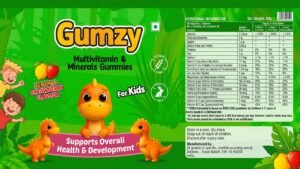
No gummy converts into marks let’s be adults about that. What supplements do is remove nutritional handbrakes: an iron-replete, DHA-supplied, B12-sufficient brain works at its own full capacity, and a deficient one doesn’t. For kids whose plates can’t guarantee that picky eaters, vegetarian households, chaotic exam-season routines a daily multivitamin plus a DHA gummy is a low-effort insurance policy. Gumzy’s Kids Multivitamin covers the B-vitamins, zinc and iodine side; our vegan algal DHA gummies cover the brain-fat side without fish or fishy taste. Start them weeks before exams, not the night before — nutrition compounds; it doesn’t cram.
Frequently Asked Questions
Which vitamin is best for a child’s memory?
No single nutrient owns memory, but the strongest evidence clusters around iron (attention and learning), B12 (nerve function), and omega-3 DHA (brain structure). The bigger principle: correcting a deficiency helps noticeably; mega-dosing an already-sufficient child doesn’t.
Does skipping breakfast affect grades?
The research is fairly consistent: breakfast skippers show poorer attention and working memory through the morning, and regular breakfast habits correlate with better school performance. The effect is biggest in younger children and on demanding subjects scheduled before lunch.
Are “brain tonics” worth it?
Most heavily-advertised tonics are sugar syrups with token nutrients and outsized promises. Anything claiming to “increase IQ” or “guarantee memory” has left science behind. Spend instead on real breakfasts, tested-and-corrected iron status, DHA if the diet lacks fish, and sleep boring, evidence-based, effective.
The Bottom Line
Feeding a brain for school isn’t exotic: a real breakfast every single day, a tiffin that doesn’t detonate at noon, water, an early dinner, and ruthless protection of sleep. Layer the five focus nutrients underneath through food first, gummies as the gap-filler and you’ve done more for exam performance than any tonic ever sold.
Build the exam-season stack early. Pair Gumzy’s Kids Complete Multivitamin Gummies with our vegan Kids DHA Gummies daily brain fuel kids take without a fight. Shop Now






Add comment