Vegan DHA Gummies vs Fish Oil for Kids: What Parents Should Know
Vegan DHA Gummies vs Fish Oil for Kids: What Parents Should Know
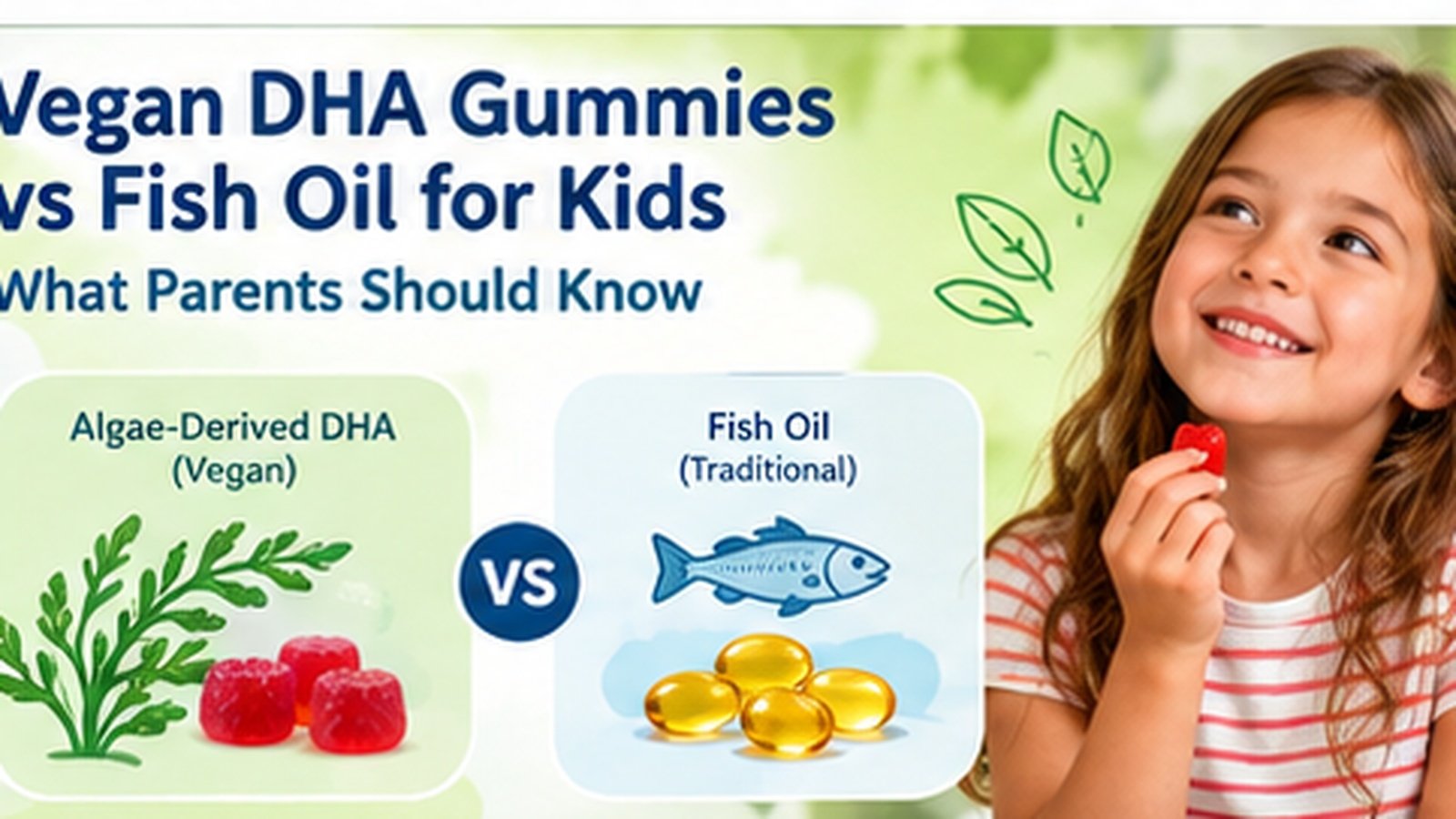
When parents compare vegan DHA gummies vs fish oil for kids, the key question is not simply which format looks better.
The more useful questions are:
Where does the DHA come from?
How much DHA does the product provide?
Does it fit the child’s dietary and nutritional needs?
What Is the Difference?
Fish oil is derived from fish and can contain EPA, DHA or both.
Algal oil comes from marine algae and can provide DHA without using fish as the source.
Therefore, both approaches can provide omega-3 nutrition, but their sources and formulations are different.
Why Might Parents Choose Algal DHA?
For vegan families, algae-derived DHA can provide a direct source of DHA without requiring fish or fish oil.
The American Academy of Pediatrics discusses EPA and DHA in vegetarian and vegan children’s diets.
This makes algal DHA an option worth considering for families following plant-based eating patterns.
What About Fish?
Fish remains an important food source of DHA and provides additional nutrients, including protein and vitamins and minerals.
Parents should also consider guidance on choosing fish with lower mercury exposure for children.
A supplement does not provide all the nutritional benefits of a whole food.
Gumzy’s Vegan DHA Approach
Gumzy DHA Vegan Gummies use marine-algal DHA rather than fish oil.
Each gummy provides 200 mg DHA, and the gummy uses citrus pectin instead of animal-derived gelatin. It has a strawberry flavour and is labelled for children aged 2 years and above.
Vegan DHA Gummies vs Fish Oil: What Should You Compare?
| Factor | Vegan DHA Gummies | Fish Oil |
|---|---|---|
| DHA source | Marine algae | Fish |
| Vegan suitability | Can be suitable | Generally not vegan |
| EPA | Depends on formulation | Often present |
| DHA | Depends on formulation | Often present |
| Whole-food nutrition | No | No |
| Format | Gummy | Oil/capsule/gummy depending on product |
| Taste preference | May be easier for some children | Can have fishy taste or aftertaste |
| Label checking | Important | Important |
Neither format automatically suits every child.
The most important consideration is whether the source, dose, ingredients and serving instructions fit the child’s needs.
What Should Parents Look For?
When comparing products, check:
- DHA amount
- EPA amount, if present
- Source
- Age recommendation
- Other ingredients
- Allergens
- Serving size
- Choking precautions
- Storage instructions
- Whether supplementation is actually needed
Final Takeaway
Fish and algae can both provide omega-3 nutrition, but they suit different dietary preferences and formulations.
For vegan families, algae-derived DHA provides a direct plant-based source of DHA.
Gumzy DHA Vegan Gummies provide 200 mg algal DHA per gummy in a strawberry-flavoured, citrus-pectin gummy.
Explore: Gumzy DHA Vegan Gummies
References
- National Institutes of Health, Office of Dietary Supplements. Omega-3 Fatty Acids — Fact Sheet for Consumers.
NIH Office of Dietary Supplements - American Academy of Pediatrics, HealthyChildren.org. My Child Wants to Be a Vegetarian. Is That OK?
HealthyChildren.org - National Institutes of Health, Office of Dietary Supplements. Omega-3 Fatty Acids — Health Professional Fact Sheet.
NIH Health Professional Fact Sheet
Medical & Nutrition Disclaimer: This article is for educational purposes and does not replace individualized medical or nutritional advice.
Written by : Dr Parag Sharma MD, Lifestyle Medicine Expert, India
Medically reviewed by : Dr Saniya Khan PhD, Certified Nutrionist and Researcher, Italy
Last reviewed: 8 October 2026
Next review: 10 April 2027
Our sources: WHO, ICMR-NIN, CDC, UNICEF, NHS, Mayo Clinic, NIH and peer-reviewed studies.
Vegan DHA gummies for kids — nourishment from plants, not fish.