Monsoon Immunity Boosters: 9 Ways to Stay Healthy in the Rains and Winter
Monsoon Immunity Boosters: 9 Ways to Stay Healthy in the Rains and Winter
Written by : Dr Parag Sharma MD, Lifestyle Medicine Expert, India
Medically reviewed by Dr Saniya Khan PhD, Certified Nutrionist and Researcher, Italy
Last reviewed: 19 September 2026
Next review: 19 March 2027
Our sources: WHO, ICMR-NIN, CDC, UNICEF, NHS, Mayo Clinic, NIH and peer-reviewed studies.
Monsoon immunity boosters start with simple habits, not expensive products. Rain brings more waterborne infections, damp air and less sunshine, and winter follows soon after. Therefore, the weeks between the rains and the cold are a good time to build a routine. Here are nine practical steps for Indian families, backed by public-health guidance.
Quick answer: The best monsoon immunity boosters are clean hands and safe water, seasonal fruit and vegetables, enough protein, 7+ hours of sleep, regular movement, timely vaccines and, if your diet has gaps, a supplement chosen with a doctor’s advice.
9 Monsoon Immunity Boosters That Help
- Wash your hands often. Use soap and water for at least 20 seconds, especially before eating and after coming home. CDC on handwashing
- Drink safe water and eat fresh food. Boil or filter water, avoid cut fruit from street stalls, and eat freshly cooked meals. Waterborne illness is a bigger risk in the rains.
- Eat seasonal, colourful produce. Amla, guava, jamun, lemon, carrots and leafy greens supply vitamin C and other nutrients. The ICMR-NIN Dietary Guidelines for Indians stress variety on every plate.
- Include protein and zinc foods. Dal, chana, curd, paneer, eggs, nuts and seeds help your body repair and build immune cells.
- Do not skip vitamin D sources. Cloudy days cut sun exposure. Include egg yolk, fortified milk or oil, and get outdoor time when the sun is out. See vitamin D deficiency in India.
- Sleep 7 or more hours. Poor sleep is linked with more infections. Keep a fixed bedtime.
- Stay active indoors. A 30-minute walk, yoga or home workout keeps you moving even when it is wet outside.
- Enjoy warm fluids and kadha in moderation. Ginger, tulsi and pepper are comforting. However, too much can upset the stomach. Compare options in immune gummies vs kadha.
- Stay up to date with vaccines. Ask your doctor about seasonal flu and other vaccines that suit your age and health. CDC on preventing respiratory viruses
Where Supplements Fit Into Monsoon Immunity Boosters
Supplements sit at the end of the list, not the start. If your meals are limited, you avoid dairy or eggs, or you have low vitamin D, a supplement may help. In that case, a gummy with clear doses can be an easy habit. Our guide to daily immune support gummies explains how to choose one and how much is safe.
Parents should choose kids’ products only. See “kids multivitamin gummies” for age-wise guidance.
When to See a Doctor
Do not treat serious symptoms with home remedies or supplements. Seek medical care for:
- fever lasting more than three days or a very high fever;
- severe headache, rash, pain behind the eyes or bleeding (possible dengue);
- vomiting or diarrhoea with dehydration;
- breathing difficulty or chest pain;
- any illness in babies, older adults or people with chronic conditions.
Frequently Asked Questions
What are the best monsoon immunity boosters for kids?
Hand hygiene, safe food and water, fruit and vegetables, enough sleep and up-to-date vaccines. Ask a paediatrician before giving any supplement.
Do monsoon immunity boosters prevent dengue or typhoid?
No. Vaccines where available, mosquito control and safe water matter most. Supplements do not prevent these diseases.
Can I take vitamin C daily in the rainy season?
Food sources are best. Supplement doses should stay within the label and the adult upper limit of 2,000 mg a day. NIH ODS
Make immune support part of your daily routine
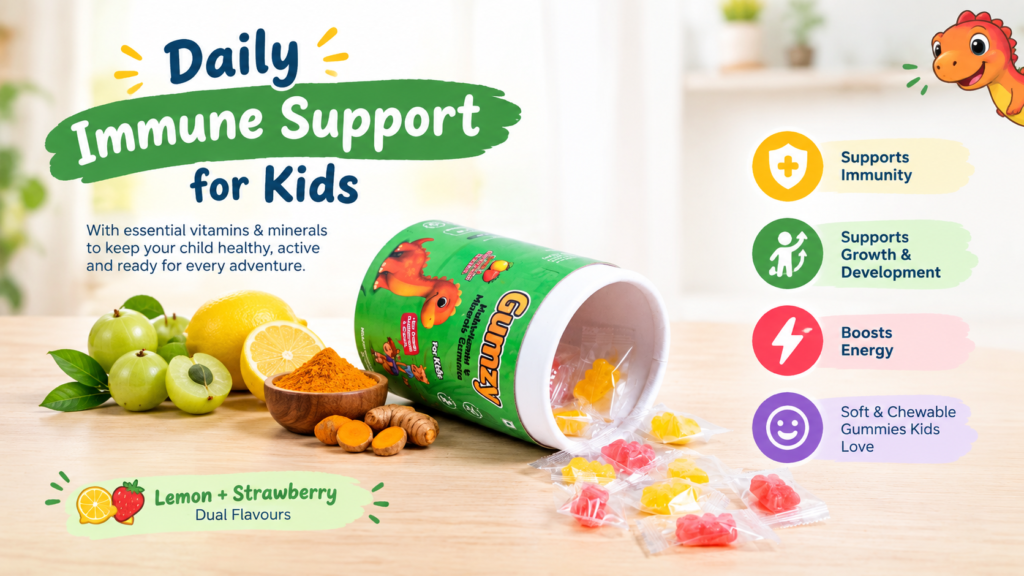
Daily Immune Support for Kids with Gumzy Multivitamin & Mineral Gummies
Looking for a simple daily gummy with transparent doses? Explore Kids Multivitamin and Mineral Gummies from Gumzy. Shop on the Gumzy website → | Buy on the Gumzy Amazon store → Supplements support, but do not replace, a varied diet, sleep and medical care.
This content is for general information only. It is not medical advice and does not diagnose, treat or prevent any disease. Dietary supplements are not a substitute for a balanced diet or medical care. Consult a qualified doctor or registered dietitian before starting any supplement, especially if you are pregnant, breastfeeding, giving it to a child, have a medical condition or take medicines.
References
- CDC. Handwashing. https://www.cdc.gov/handwashing/index.html
- CDC. Preventing respiratory viruses. https://www.cdc.gov/respiratory-viruses/prevention/index.html
- ICMR-NIN. Dietary Guidelines for Indians (2024). https://www.nin.res.in/dietaryguidelines/pdfjs/locale/DGI24thJune2024fin.pdf
- WHO. Micronutrients. https://www.who.int/health-topics/micronutrients
- NIH ODS. Vitamin C fact sheet. https://ods.od.nih.gov/factsheets/VitaminC-HealthProfessional/