Daily Immune Support Gummies: The Complete Guide for Indian Families
Daily Immune Support Gummies: The Complete Guide for Indian Families
Written by : Dr Parag Sharma MD, Lifestyle Medicine Expert, India
Medically reviewed by Dr Saniya Khan PhD, Certified Nutrionist and Researcher, Italy
Last reviewed: 19 September 2026
Next review: 19 March 2027
Our sources: WHO, ICMR-NIN, CDC, UNICEF, NHS, Mayo Clinic, NIH and peer-reviewed studies.
Disclosure: Gumzy sells immune support gummies. Our medical reviewer has no role in product sales, and we recommend food, sleep and doctor advice before any supplement.
Daily immune support gummies are chewable supplements that combine nutrients such as vitamin C, vitamin D3 and zinc in a soft, fruity gummy. Many Indian families now use them because they are easy to take and easy to remember. However, gummies are not magic. No supplement can push a healthy immune system beyond normal, and none replaces food, sleep or vaccines. This guide explains what daily immune support gummies contain, what the research says, who may benefit, and how to choose one safely.
Quick answer: Daily immune support gummies can help fill gaps in vitamin C, vitamin D3 and zinc. That matters most for people with low intake or low vitamin D levels. They do not prevent infections on their own. Choose a gummy with clear doses, low sugar, third-party testing and a valid FSSAI licence, and stay within safe upper limits.
What Are Daily Immune Support Gummies?
Daily immune support gummies are dietary supplements made in a gummy texture. Makers use pectin (plant-based) or gelatin (animal-based) as the base. Each gummy delivers a small dose of nutrients that the immune system needs to work normally. Because these nutrients are needed every day, the gummies are meant for regular use, not only during the cold season.
In India, such products fall under FSSAI rules for health supplements. As a result, a compliant label shows the nutrient amounts, the serving size, an FSSAI licence number and a statement that the product is not a medicine. Check these before you buy.
Key Nutrients in Daily Immune Support Gummies
Most daily immune support gummies rely on three core nutrients. The table shows what each one does and what the safe upper limit is for adults.
| Nutrient | Role in immune health | Everyday Indian food sources | Adult upper limit (NIH) |
|---|---|---|---|
| Vitamin C | Supports immune cell function; works as an antioxidant | Amla, guava, lemon, orange, capsicum | 2,000 mg/day |
| Vitamin D3 | Helps regulate immune responses; supports bones and muscles | Sunlight, egg yolk, fatty fish, fortified milk and oil | 4,000 IU (100 mcg)/day |
| Zinc | Needed for developing immune cells and for wound healing | Chana, pumpkin seeds, cashews, dairy, sesame | 40 mg/day |
Some gummies also add vitamin E, selenium, vitamin B6, vitamin B12 or herbal extracts. Evidence for these extras varies, so look for the actual amount on the label rather than a vague “blend”. For a nutrient-by-nutrient breakdown, read our guide to vitamin C, D3 and zinc for immunity.
Do Daily Immune Support Gummies Really Work?
Honest answer: they work best when they correct a gap, not when you already get enough. Here is what the research shows.
- Vitamin C. A large Cochrane review found that regular vitamin C did not reduce how often most people catch a cold. However, it slightly shortened colds in adults and children. Cochrane review on vitamin C and the common cold
- Vitamin D. A BMJ analysis of clinical trials found modest protection against acute respiratory infections overall. The benefit was largest in people with very low vitamin D levels. BMJ meta-analysis on vitamin D and respiratory infections
- Zinc. Evidence suggests zinc lozenges or syrup taken soon after cold symptoms start may shorten a cold. Zinc also matters for people who are actually deficient. Mayo Clinic on zinc
Importantly, the NHS notes there is not enough evidence to recommend vitamin D just to prevent or treat COVID-19. NHS on vitamin D In short, daily immune support gummies support normal immune function. They do not act as a shield. Read more in Do immunity gummies work? Myths vs facts.
Who May Benefit From Daily Immune Support Gummies?
Daily immune support gummies may suit you if:
- You spend most of the day indoors or cover most of your skin outdoors, so you make less vitamin D.
- You follow a vegetarian or vegan diet and get little zinc from food.
- You eat few fruits and vegetables, so vitamin C intake is low.
- Your doctor has confirmed a low vitamin D level. In that case, follow the dose your doctor prescribes. See vitamin D deficiency in India.
- You struggle to swallow tablets or capsules.
Be careful, and speak to a doctor first, if you are pregnant or breastfeeding, have kidney stones or kidney disease, take antibiotics or other regular medicines, or plan to give a gummy to a child. Children need a product made for their age. Parents can start with our “kids multivitamin gummies guide”.
Why Nutrient Gaps Are Common in India
Micronutrient shortfalls are a global problem. A joint statement by WHO, WFP and UNICEF estimates that more than 2 billion people are deficient in key vitamins and minerals, including iron and zinc. WHO, WFP and UNICEF statement WHO also stresses that many deficiencies are preventable through diverse diets, fortification and, where needed, supplements. WHO on micronutrients
In India, UNICEF’s 2019 report on adolescents and nutrition highlighted “hidden hunger”, meaning low micronutrient intake even when calories are enough. Meanwhile, ICMR-NIN publishes India-specific Recommended Dietary Allowances so that families and clinicians can judge intake properly. ICMR-NIN Nutrient Requirements for Indians Therefore, food should always come first, and a gummy should fill only what your plate misses.
How to Choose the Best Daily Immune Support Gummies
Use this checklist. It works for any brand, including ours.
- Read the full nutrient amounts. Look for milligrams or micrograms per serving. Avoid “proprietary blends” that hide doses.
- Check doses against upper limits. Total intake from food, other supplements and gummies should stay under the limits in the table above.
- Compare sugar per gummy. Some gummies carry several grams. If sugar matters to you, see our “sugar-free gummy vitamins guide”.
- Know the base. Pectin suits vegetarians and vegans; gelatin does not. See our “vegan multivitamin gummies guide”.
- Look for an FSSAI licence number and ask for a batch test report (COA) from an independent lab.
- Beware of big promises. Words like “cures”, “prevents infection” or “100% protection” break advertising rules set by ASCI and FSSAI.
- Match the product to the age group. Adult and kids’ gummies use different doses.
- Check the expiry date. Vitamins in gummies can lose strength over time, so buy from a reliable seller and store as directed.
Want to compare a gummy against this checklist? See the full label and nutrient amounts for Kids Multivitamin and Mineral Gummies on Gumzy or check current availability on the Gumzy Amazon store.
How to Take Daily Immune Support Gummies Safely
Follow these steps for safe daily use:
- Follow the label serving. Do not double up because you feel a cold coming.
- Take it with or after a meal. Vitamin D is fat-soluble, and food also reduces stomach upset from zinc.
- Pick a fixed time. A morning routine works well for most people.
- Count your total intake. If you already take a multivitamin, check that you are not duplicating vitamin C, D or zinc. See our “multivitamin gummies for adults guide”.
- Store them safely. Keep the bottle in a cool, dry place and out of children’s reach, because gummies look like sweets.
- Know when to stop. Stop and speak to a doctor if you notice rash, swelling, persistent stomach upset or unusual symptoms.
Note that zinc can reduce how well some antibiotics work, so ask your doctor or pharmacist if you take regular medicines. Mayo Clinic on zinc interactions
Gummies vs Tablets vs Kadha: Which Fits Your Routine?
Gummies win on taste and habit. Tablets and capsules often carry higher doses and no sugar. Kadha offers warmth and comfort with kitchen spices, although its nutrient content is not standardised. Many families use more than one. For a full side-by-side look, read immune gummies vs kadha.
Daily Habits That Matter More Than Any Gummy
Supplements sit at the bottom of the immunity pyramid. The habits below have stronger public-health backing:
- Wash your hands with soap and water. CDC on handwashing
- Stay up to date with vaccines your doctor recommends. CDC on preventing respiratory viruses
- Eat a varied plate with vegetables, fruit, pulses, dairy and nuts, in line with the ICMR-NIN Dietary Guidelines for Indians.
- Sleep 7 or more hours and stay physically active.
- Drink safe water and follow food hygiene, especially in the rainy season. See our monsoon immunity boosters.
Frequently Asked Questions
Can I take daily immune support gummies every day?
Yes, if you follow the serving on the label and your total intake stays below the upper limits. Check with your doctor if you have a health condition or take medicines.
How many daily immune support gummies should I take?
Follow the label. Many products list one to two gummies a day, but doses differ by brand. Never exceed the stated serving.
What is the best time to take them?
Take them with or after a meal at the same time each day. Consistency matters more than the exact hour.
Are daily immune support gummies safe for children?
Only use a product made for children, and check with your healthcare provider first. Do not share adult gummies with kids.
Can I take them with a multivitamin?
Sometimes, but overlap is likely. Add up vitamin C, vitamin D and zinc from both products so you stay under the upper limits.
How long do they take to work?
You will not “feel” a difference in most cases. The aim is to correct low intake over weeks to months.
Are they suitable for people with diabetes?
Regular gummies contain minimal sugar. Ask your doctor, and consider a sugar-free option.
Key Takeaways
- Daily immune support gummies help fill gaps in vitamin C, vitamin D3 and zinc.
- They support normal immune function; they do not prevent illness.
- Choose clear labels, safe doses, an FSSAI licence and third-party testing.
- Food, sleep, hygiene and vaccines matter more than any supplement.
- Ask a doctor first if you are pregnant, on medicines or buying for a child.
Make immune support part of your daily routine
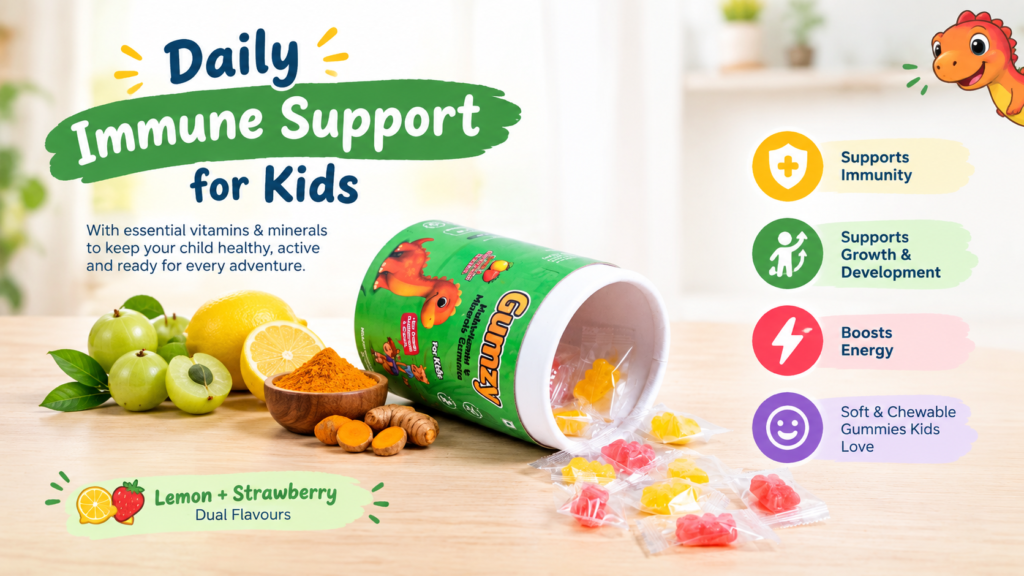
Daily Immune Support for Kids with Gumzy Multivitamin & Mineral Gummies
Looking for a simple daily gummy with transparent doses? Explore Kids Multivitamin and Mineral Gummies from Gumzy. Shop on the Gumzy website → | Buy on the Gumzy Amazon store → Supplements support, but do not replace, a varied diet, sleep and medical care.
Free download: 7-Day Immunity Habit Checklist (PDF)
This content is for general information only. It is not medical advice and does not diagnose, treat or prevent any disease. Dietary supplements are not a substitute for a balanced diet or medical care. Consult a qualified doctor or registered dietitian before starting any supplement, especially if you are pregnant, breastfeeding, giving it to a child, have a medical condition or take medicines.
References
- NHS. Vitamin D. https://www.nhs.uk/conditions/vitamins-and-minerals/vitamin-d/
- Mayo Clinic. Zinc. https://www.mayoclinic.org/drugs-supplements-zinc/art-20366112
- Hemilä H, Chalker E. Vitamin C for preventing and treating the common cold. Cochrane Database Syst Rev. 2013. https://www.cochranelibrary.com/cdsr/doi/10.1002/14651858.CD000980.pub4/full
- Martineau AR et al. Vitamin D supplementation to prevent acute respiratory tract infections: systematic review and meta-analysis. BMJ. 2017;356:i6583. https://www.bmj.com/content/356/bmj.i6583
- WHO, WFP, UNICEF. Preventing and controlling micronutrient deficiencies in populations affected by an emergency. https://www.who.int/publications/m/item/WHO-WFP-UNICEF-statement-micronutrients-deficiencies-emergency
- WHO. Micronutrients. https://www.who.int/health-topics/micronutrients
- ICMR-NIN. Nutrient Requirements and Recommended Dietary Allowances for Indians (2020). https://www.nin.res.in/RDA_Full_Report_2024.html
- ICMR-NIN. Dietary Guidelines for Indians (2024). https://www.nin.res.in/dietaryguidelines/pdfjs/locale/DGI24thJune2024fin.pdf
- CDC. Handwashing. https://www.cdc.gov/handwashing/index.html
- CDC. Preventing respiratory viruses. https://www.cdc.gov/respiratory-viruses/prevention/index.html
- UNICEF. Adolescents, Diets and Nutrition: Growing Well in a Changing World (2019).
- NIH Office of Dietary Supplements. Fact sheets for vitamin C, vitamin D and zinc. https://ods.od.nih.gov/factsheets/VitaminD-Consumer/