Vitamin C, D3 and Zinc: What Each Nutrient Does for Immunity
Vitamin C, D3 and Zinc: What Each Nutrient Does for Immunity
Written by : Dr Parag Sharma MD, Lifestyle Medicine Expert, India
Medically reviewed by Dr Saniya Khan PhD, Certified Nutrionist and Researcher, Italy
Last reviewed: 19 September 2026
Next review: 19 March 2027
Our sources: WHO, ICMR-NIN, CDC, UNICEF, NHS, Mayo Clinic, NIH and peer-reviewed studies.
Vitamin C D3 zinc is the trio you will find in most immunity supplements, and for good reason. Each nutrient plays a different part in how your immune system works. However, more is not better, and each one has a safe upper limit. This guide explains what each does, where to find it in Indian food, and when a supplement may help.
Quick answer: Vitamin C supports immune cell function and acts as an antioxidant. Vitamin D3 helps regulate immune responses and keeps bones strong. Zinc helps immune cells develop and supports wound healing. You can get all three from food, but gummies can fill gaps.
Vitamin C D3 Zinc at a Glance
The values below are US NIH reference figures. ICMR-NIN publishes India-specific RDAs in its 2020 report, so compare both before setting label advice. ICMR-NIN RDA report
| Nutrient | Adult reference intake (NIH) | Upper limit (NIH) | Type |
|---|---|---|---|
| Vitamin C | 90 mg (men), 75 mg (women) | 2,000 mg | Water-soluble |
| Vitamin D3 | 600 IU / 15 mcg (to age 70) | 4,000 IU / 100 mcg | Fat-soluble |
| Zinc | 11 mg (men), 8 mg (women) | 40 mg | Mineral |
{{Editor: confirm the NIH and ICMR figures against R12–R14 and R7 on the day you publish.}}
What Vitamin C Does for Your Immune System
Vitamin C helps immune cells work and protects them from damage. Your body cannot store much of it, so you need a regular supply. The NHS lists it as important for normal cell function and healing. NHS on vitamin C
Research shows regular vitamin C does not stop most people catching colds. Nevertheless, it may shorten them slightly. Cochrane review Good Indian sources include amla, guava, lemon, oranges and capsicum.
What Vitamin D3 Does for Immunity
Vitamin D3 helps regulate the immune response and supports calcium use for bones and muscles. Many people in India make too little because of indoor living, clothing, pollution and darker skin, which absorbs less UVB. Read more in vitamin D deficiency in India.
A BMJ analysis found vitamin D supplements modestly reduced acute respiratory infections, especially in people with very low levels. BMJ meta-analysis The NHS advises 10 micrograms (400 IU) a day for most adults and children over one year during autumn and winter, and all year for people at higher risk. NHS on vitamin D Food sources include egg yolk, fatty fish and fortified milk or oil.
What Zinc Does for Your Body’s Defences
Zinc helps immune cells develop and communicate. It also supports wound healing and taste. Most people with a mixed diet get enough, but vegetarians may fall short because plant zinc is absorbed less easily.
Zinc lozenges or syrup taken within a day of cold symptoms may shorten a cold. However, high doses over time can cause nausea and copper deficiency, and the adult upper limit is 40 mg a day. Mayo Clinic on zinc Good sources include chana, pumpkin seeds, cashews, sesame and dairy.
Do You Need Vitamin C D3 Zinc Together?
Not necessarily. No strong evidence shows the trio works better together than each nutrient alone. Instead, choose based on your gaps. For example, a person with low sun exposure may need vitamin D most, while a strict vegetarian may need zinc. A doctor can advise, and a blood test can confirm vitamin D.
Want to compare a gummy against this checklist? See the full label and nutrient amounts for Kids Multivitamin and Mineral Gummies on Gumzy or check current availability on the Gumzy Amazon store.
When a Vitamin C D3 Zinc Gummy May Help (and When to Be Careful)
A gummy may help if your diet is limited, if you cannot swallow tablets, or if you need a simple daily habit. Look at the full picture in our guide to daily immune support gummies.
Be careful if you:
- have a history of kidney stones (very high vitamin C can matter);
- take antibiotics or other regular medicines (zinc can interfere);
- are pregnant, breastfeeding or buying for a child;
- already take a multivitamin, which may duplicate these nutrients.
Frequently Asked Questions
Which is more important: vitamin C, D3 or zinc?
None is “most important”. Each covers a different job, and your needs depend on your diet, sun exposure and health.
Can I take vitamin C D3 zinc every day?
Yes, at label doses that keep total intake below the upper limits. Ask your doctor if you take medicines.
What is the best time to take vitamin D3?
Take it with a meal that contains some fat, because vitamin D is fat-soluble.
Make immune support part of your daily routine
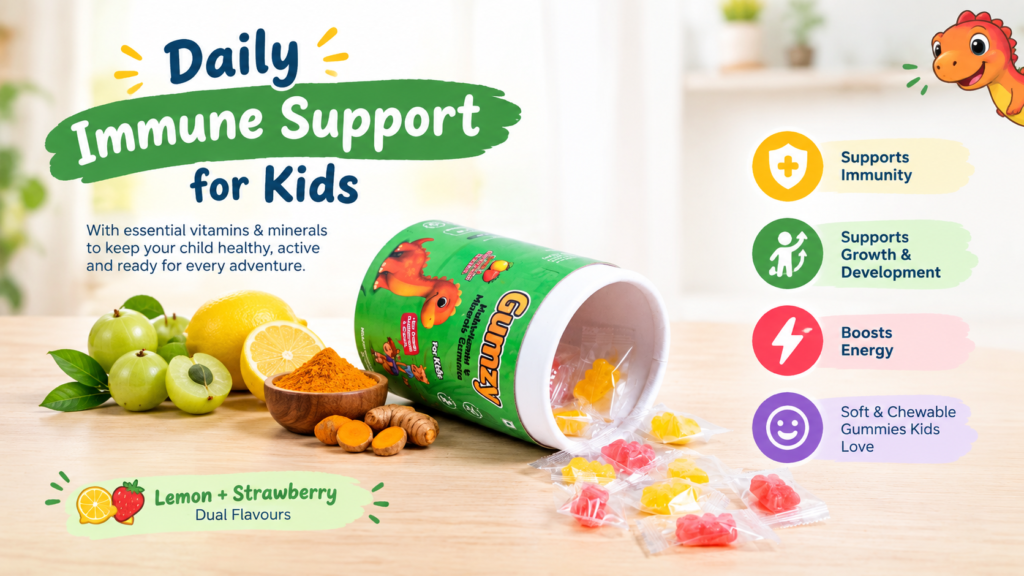
Daily Immune Support for Kids with Gumzy Multivitamin & Mineral Gummies
Looking for a simple daily gummy with transparent doses? Explore Kids Multivitamin and Mineral Gummies from Gumzy. Shop on the Gumzy website → | Buy on the Gumzy Amazon store → Supplements support, but do not replace, a varied diet, sleep and medical care.
This content is for general information only. It is not medical advice and does not diagnose, treat or prevent any disease. Dietary supplements are not a substitute for a balanced diet or medical care. Consult a qualified doctor or registered dietitian before starting any supplement, especially if you are pregnant, breastfeeding, giving it to a child, have a medical condition or take medicines.
References
- NHS. Vitamin C. https://www.nhs.uk/conditions/vitamins-and-minerals/vitamin-c/
- NHS. Vitamin D. https://www.nhs.uk/conditions/vitamins-and-minerals/vitamin-d/
- Mayo Clinic. Zinc. https://www.mayoclinic.org/drugs-supplements-zinc/art-20366112
- Mayo Clinic. Vitamin D. https://www.mayoclinic.org/drugs-supplements-vitamin-d/art-20363792
- NIH ODS. Vitamin C, Vitamin D, Zinc fact sheets. https://ods.od.nih.gov/factsheets/VitaminD-Consumer/
- Hemilä H, Chalker E. Cochrane Database Syst Rev. 2013. https://www.cochranelibrary.com/cdsr/doi/10.1002/14651858.CD000980.pub4/full
- Martineau AR et al. BMJ. 2017;356:i6583. https://www.bmj.com/content/356/bmj.i6583
- ICMR-NIN. Nutrient Requirements for Indians (2020). https://www.nin.res.in/RDA_Full_Report_2024.html