
10 Healthy Foods for Picky Eaters: Parent-Friendly Ideas
10 Healthy Foods for Picky Eaters: Parent-Friendly Ideas
Getting children to eat a balanced diet can be challenging, especially when they have strong preferences about taste, texture, colour or presentation. Here are 10 healthy foods for picky eaters that can be adapted to different tastes and textures.
If your child regularly refuses vegetables, avoids unfamiliar foods or wants the same few meals repeatedly, you’re not alone. Picky eating is common during childhood, particularly during the toddler and preschool years. The goal isn’t to make every meal perfect—it is to gradually build familiarity with a wider variety of nutritious foods.
Instead of turning mealtimes into a battle, parents can focus on offering nutritious choices regularly and creating positive experiences around food.

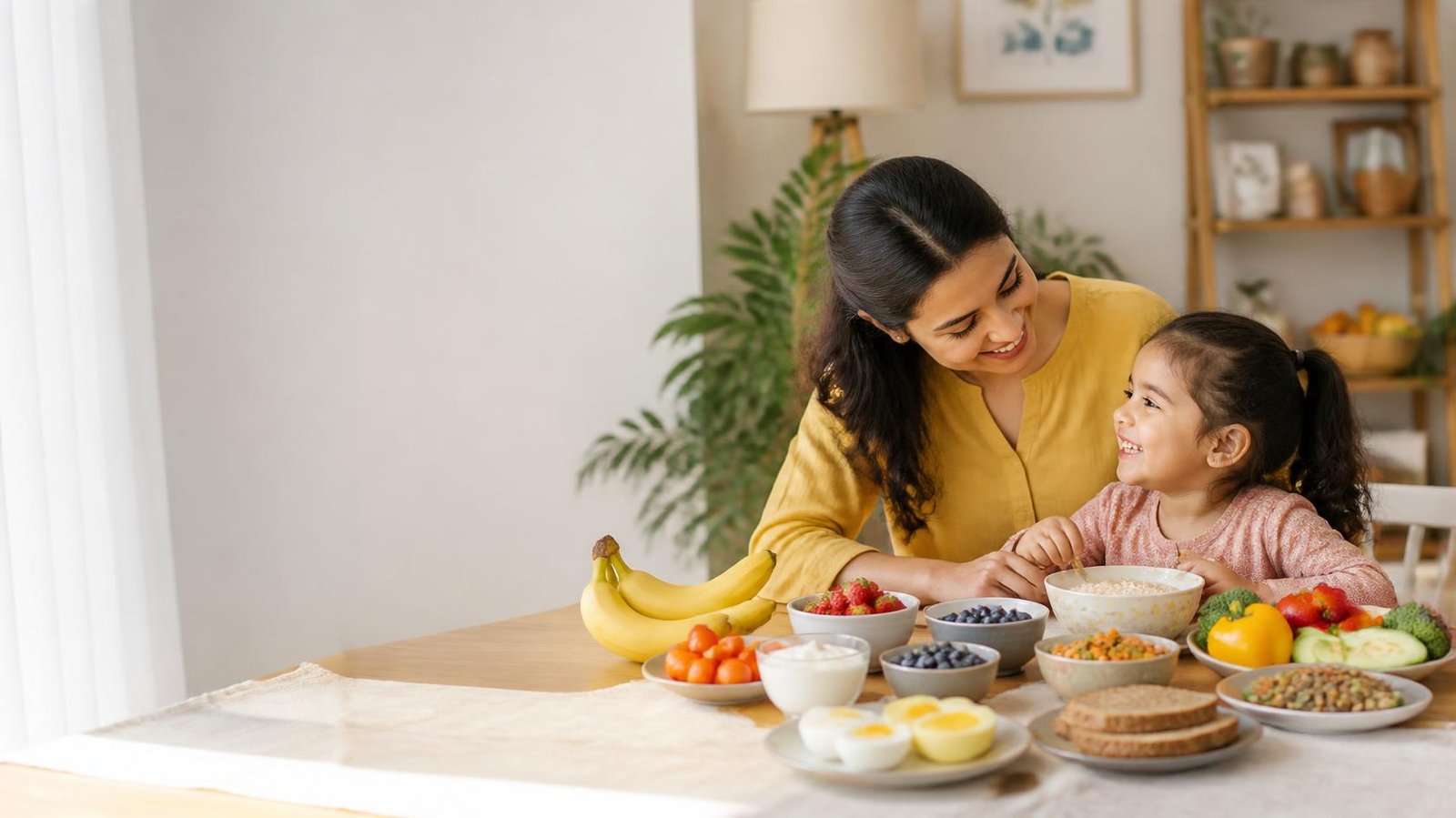
Mother and child exploring healthy foods for picky eaters including fruits, vegetables, eggs, yogurt, oats and whole grains.
1. Bananas
Bananas are naturally soft, sweet and easy for children to eat.
They can be served:
- Sliced into breakfast cereal
- Served as a simple snack
- Mixed with yogurt
- Added to a smoothie
- Mashed onto toast
For children who dislike fruits, bananas can be a familiar starting point before introducing other varieties.
2. Eggs
Eggs are a good source of protein and can be prepared in several child-friendly ways.
Try:
- Omelettes with finely chopped vegetables
- Scrambled eggs
- Boiled eggs
- Egg sandwiches
- Egg added to rice or other familiar dishes
Changing the preparation method or shaping it in kid friendly ways can sometimes make a previously rejected food more acceptable.
3. Yogurt
Plain or minimally sweetened yogurt can be an easy addition to a child’s diet.
Try combining yogurt with:
- Banana
- Strawberry
- Mango
- Apple
- Nut or seed butter where appropriate and safe
For younger children, parents should consider age-appropriate textures and any known food allergies.
4. Oats
Oats are a convenient whole-grain option and can be adapted to your child’s preferences.
For example, prepare oatmeal with milk or an appropriate dairy alternative and add fruit such as banana, apple or berries.
If your child dislikes traditional porridge, try making overnight oats or using oats in homemade pancakes.
Parent tip: Changing the presentation can be just as useful as changing the ingredient.
5. Sweet Potatoes
Sweet potatoes have a naturally mild, slightly sweet flavour that may appeal to children who reject bitter vegetables.
Try serving them as:
- Mashed sweet potato
- Soft roasted pieces
- Homemade wedges
- Sweet-potato pancakes
American Academy of Paediatrics guidance also suggests experimenting with vegetables in different forms and pairing less familiar foods with familiar ones.
6. Avocado
Avocado has a soft texture and can be incorporated into familiar foods.
Try:
- Mashed avocado on toast
- Avocado with eggs
- Avocado in a sandwich
- Small pieces alongside other foods
Its mild flavour makes it easy to combine with foods your child already accepts.
7. Lentils and Beans
For vegetarian families, lentils and beans can be useful sources of protein and other nutrients.
You can introduce them through familiar foods such as:
- Dal with rice
- Soft lentil pancakes
- Bean wraps
- Hummus with vegetables or whole-grain bread
Rather than introducing a large portion, start with a small amount alongside a food your child already enjoys.
8. Whole-Grain Foods
Whole grains can include foods such as:
- Oats
- Whole-grain bread
- Brown rice
- Whole-wheat pasta
- Other whole-grain cereals
If your child strongly prefers refined grains, you don’t necessarily need to change everything at once.
A gradual approach can work better—for example, combining a familiar pasta with a whole-wheat variety or introducing a whole-grain bread alongside a preferred filling.
9. Fruits
Fruits provide important nutrients and can be introduced in many different forms.
Depending on your child’s age and eating abilities, consider:
- Apples
- Pears
- Mango
- Oranges
- Berries
- Melons
- Papaya
If a child rejects one fruit, try another rather than assuming they dislike all fruit.
The American Academy of Pediatrics recommends offering fruits and vegetables regularly and experimenting with different options.
10. Vegetables—Served in Familiar Ways
Vegetables can be one of the biggest challenges for parents of picky eaters.
Instead of immediately expecting a child to eat a large serving of boiled vegetables, experiment with different preparations.
For example:
Carrot: grated, roasted or mixed into a familiar dish
Spinach: incorporated into an omelette or dal
Peas: mixed into rice
Broccoli: steamed and served with a familiar dip
Pumpkin: added to soup, pancakes or a familiar meal
The objective is exposure, not pressure.
How to Make Healthy Foods More Appealing to Picky Eaters
Choosing nutritious foods is only one part of the process. How food is offered can also influence whether a child is willing to explore it.
1. Start with a food your child already likes
Include at least one familiar food alongside something new.
For example:
Rice + dal + a small portion of a new vegetable
This gives the child something familiar while creating an opportunity to explore something different.
2. Keep portions small
A large serving of an unfamiliar food can feel overwhelming.
Start with a small portion and allow your child to ask for more.
3. Don’t force eating
Pressuring children to eat can turn mealtimes into stressful experiences.
Parents can decide what foods are offered and when, while children can generally have some say in whether and how much they eat from the foods offered.
4. Offer rejected foods again
A child refusing a food once doesn’t necessarily mean they will always dislike it.
Repeated, low-pressure exposure can help children become more comfortable with unfamiliar foods. The AAP notes that children may need multiple exposures before accepting a new food.
5. Eat together when possible
Children learn by observing parents and other family members.
Eating together and seeing adults enjoy a variety of foods can help model positive eating behaviours.
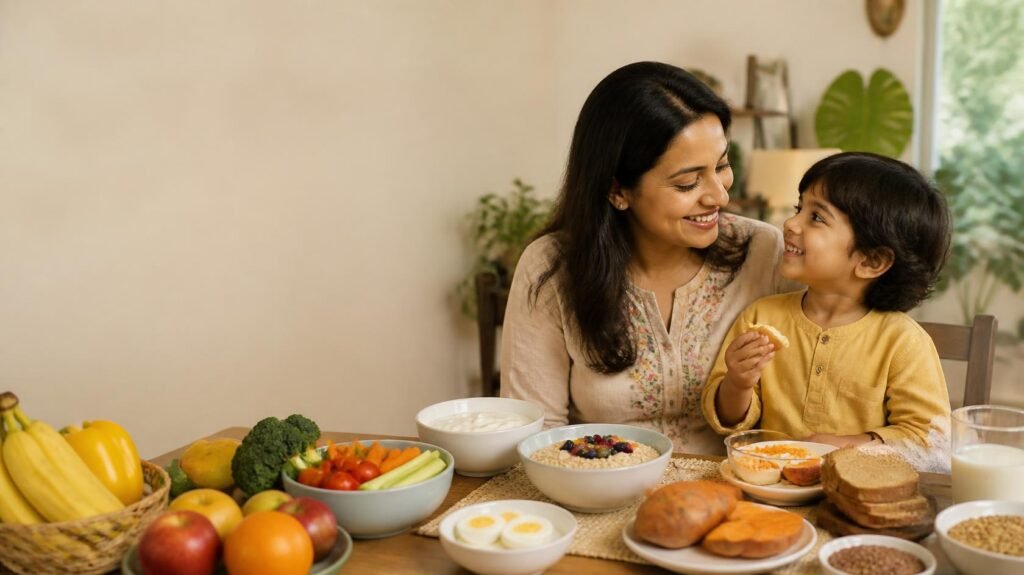
Children can get better with right intervention.
What If My Child Eats Only a Few Foods?
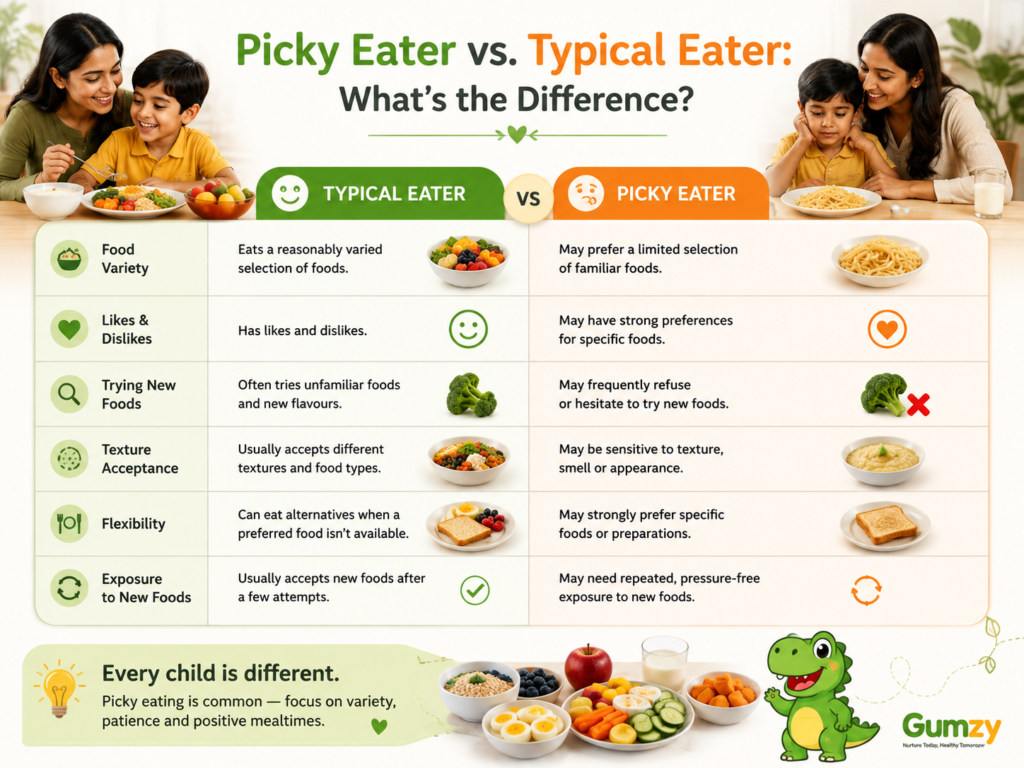
Picky eating doesn’t automatically mean that a child has a nutritional deficiency.
Instead of judging your child’s diet based on a single meal or day, look at the overall pattern across several days or a week. The NHS notes that if a child is active, appears well and is growing appropriately, occasional food refusal is usually less concerning.
However, parents should speak with a pediatrician or qualified healthcare professional if they are concerned about their child’s growth, eating pattern, nutritional intake, persistent food restrictions or other feeding difficulties.
The Goal Isn’t a Perfect Diet
One of the biggest mistakes parents can make is expecting a picky eater to suddenly start eating everything.
Healthy eating is usually built gradually.
Think:
Offer → Explore → Taste → Repeat
Rather than:
Offer → Refuse → Argue → Force
Creating a calm environment and continuing to offer a variety of nutritious foods can help children develop a broader relationship with food over time.
Parent Checklist: Building a Balanced Plate
When planning meals for a picky eater, try to include a combination of:
- 🍎 Fruit or vegetable
- 🌾 Whole grain or other carbohydrate
- 🥚 Protein source
- 🥛 Dairy or suitable alternative
- 💧 Water as the main everyday drink
The exact nutritional needs of a child vary with age, growth, activity, dietary pattern and individual circumstances.
When Should Parents Seek Professional Advice?
Consider speaking with your child’s pediatrician or a registered dietitian if you are concerned that your child:
- Has an extremely limited range of foods
- Consistently refuses entire food groups
- Has difficulty chewing or swallowing
- Is not growing as expected
- Has persistent feeding difficulties
- Causes significant concern around mealtimes
Individual nutrition advice is especially important when a child’s diet is highly restricted.
Final Takeaway
Finding healthy foods for picky eaters doesn’t have to mean preparing completely different meals every day.
Start with familiar foods, introduce variety gradually, keep portions manageable and avoid turning food into a battle.
Most importantly, focus on consistent exposure and a positive mealtime environment rather than perfection.
Looking for more practical guidance on children’s nutrition?
Explore Gumzy’s parent-focused nutrition resources for evidence-informed information and thoughtful options designed to complement healthy everyday habits.
👉 Explore Gumzy’s Kids Nutrition Resources
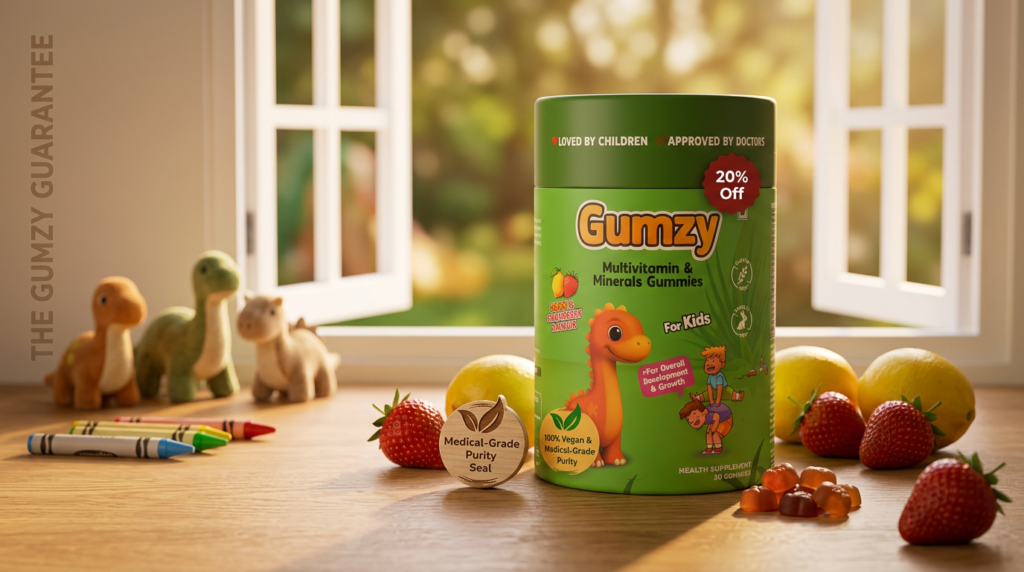
Gumzy gummy for picky eaters
References
- Centers for Disease Control and Prevention (CDC). Picky Eaters and What to Do. CDC – Picky Eaters and What to Do
- American Academy of Pediatrics. 10 Tips for Parents of Picky Eaters. HealthyChildren.org – 10 Tips for Parents of Picky Eaters
- Royal Children’s Hospital Melbourne. Typical and Problematic Feeding Difficulties.
- NHS. Fussy Eaters.
- American Academy of Pediatrics. How to Please Fussy Eaters. HealthyChildren.org – How to Please Fussy Eaters







Add comment